GAMUCATEX / June 2026 – Sept. 2026
Erabellum Battlefield
A tactical card game where players relive and rewrite history through historically-inspired, turn-based battles. Erabellum is an evolution of Gamucatex’s first game Tectonicus, delivering an updated combat system, scoring rules, additional card types and completely new visual design language.
I re-designed the gameplay UX for the battlefield experience, all of the UI elements, and was also responsible for the visual design overhaul of the game.
Role
UX, UI, Visual Design, Art Direction
Results
Currently in development with expected launch date in early 2027.
interaction architecture
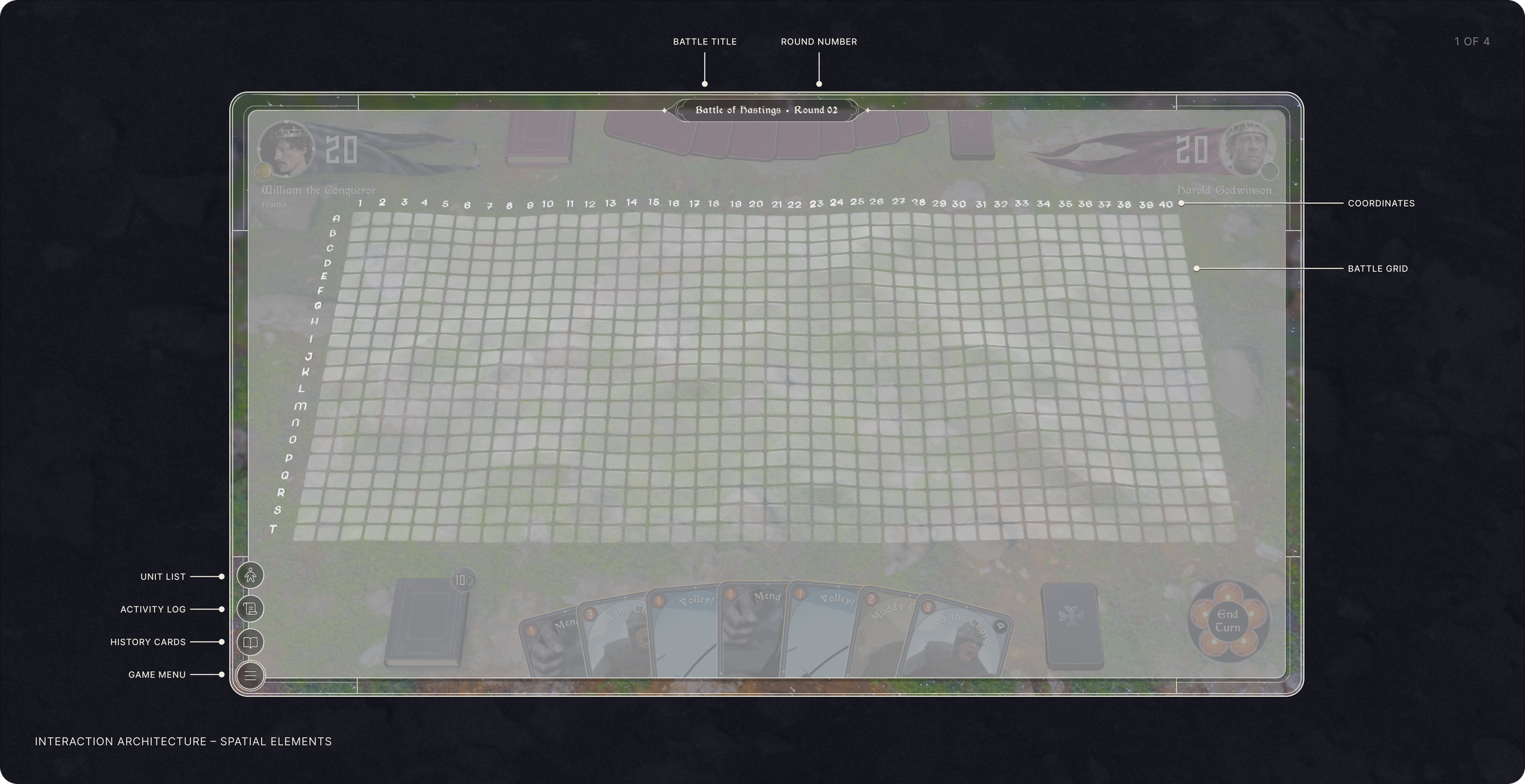
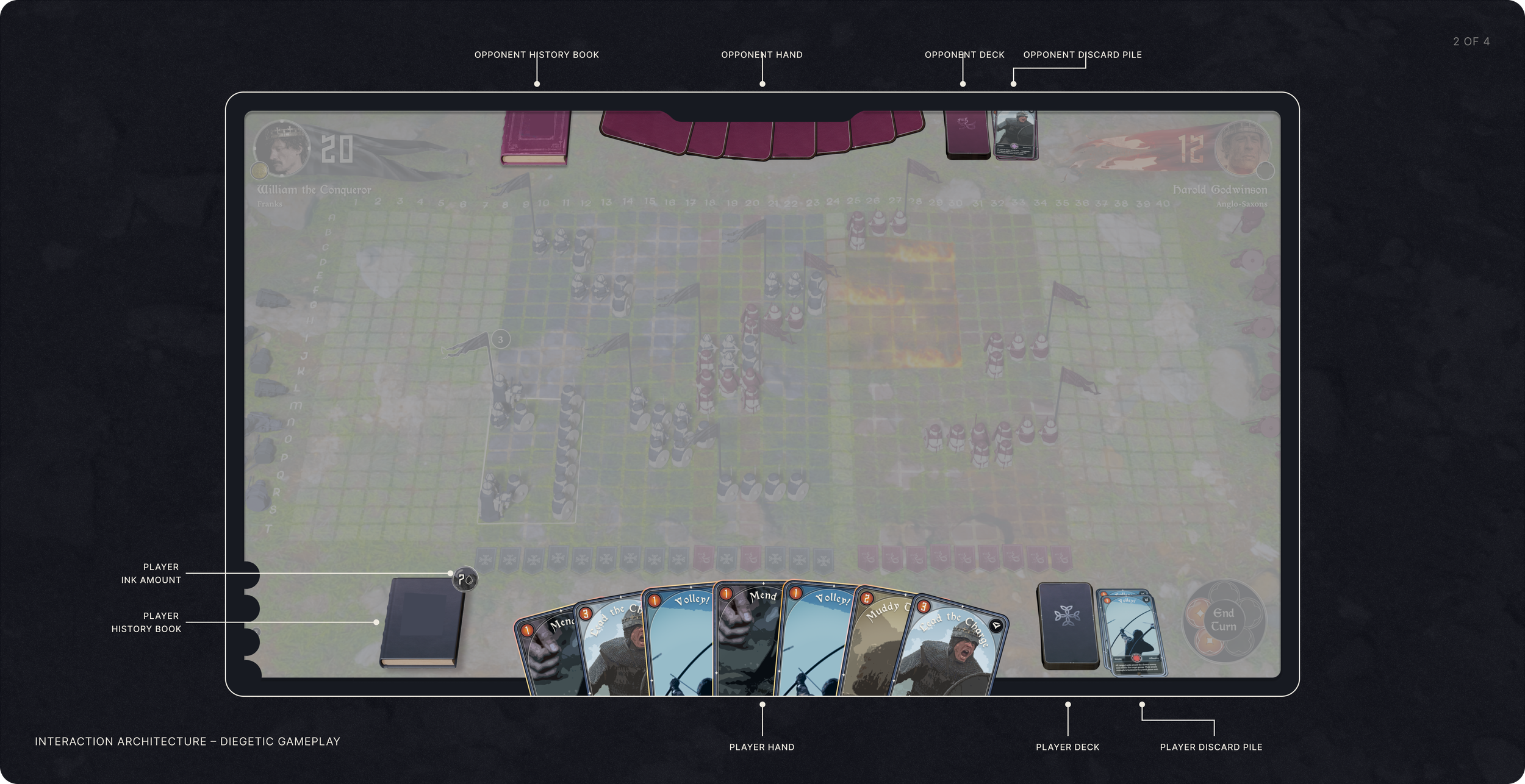
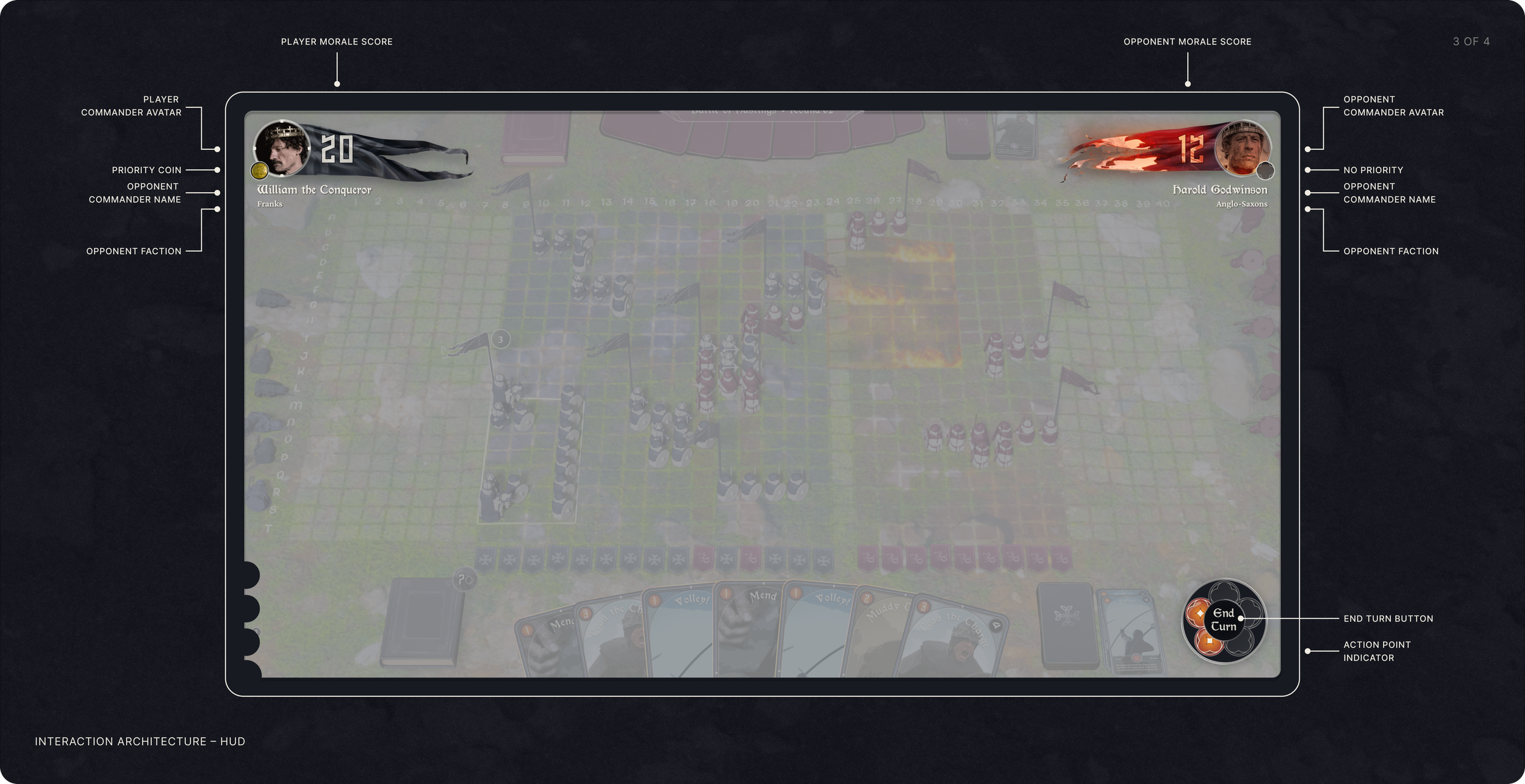
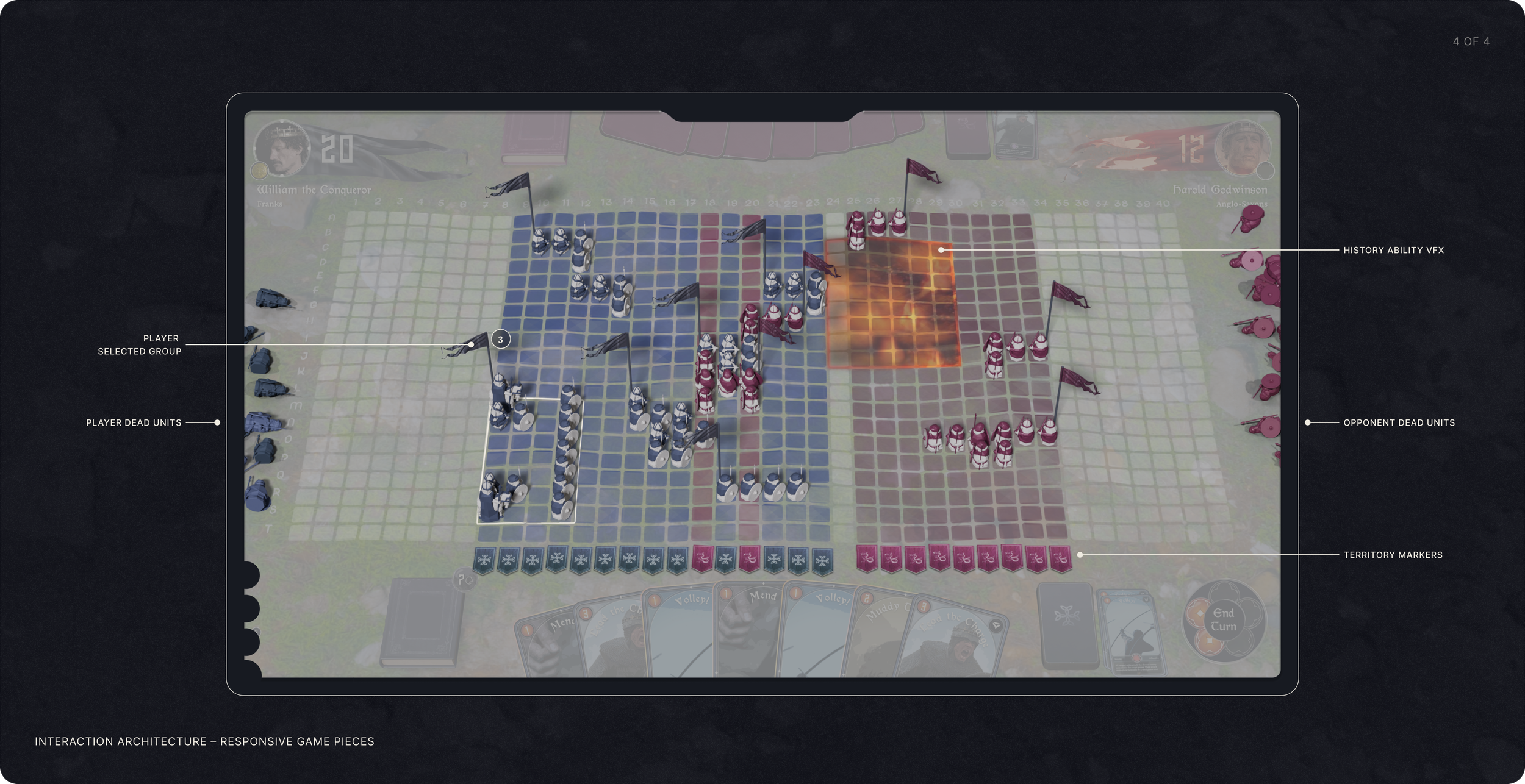
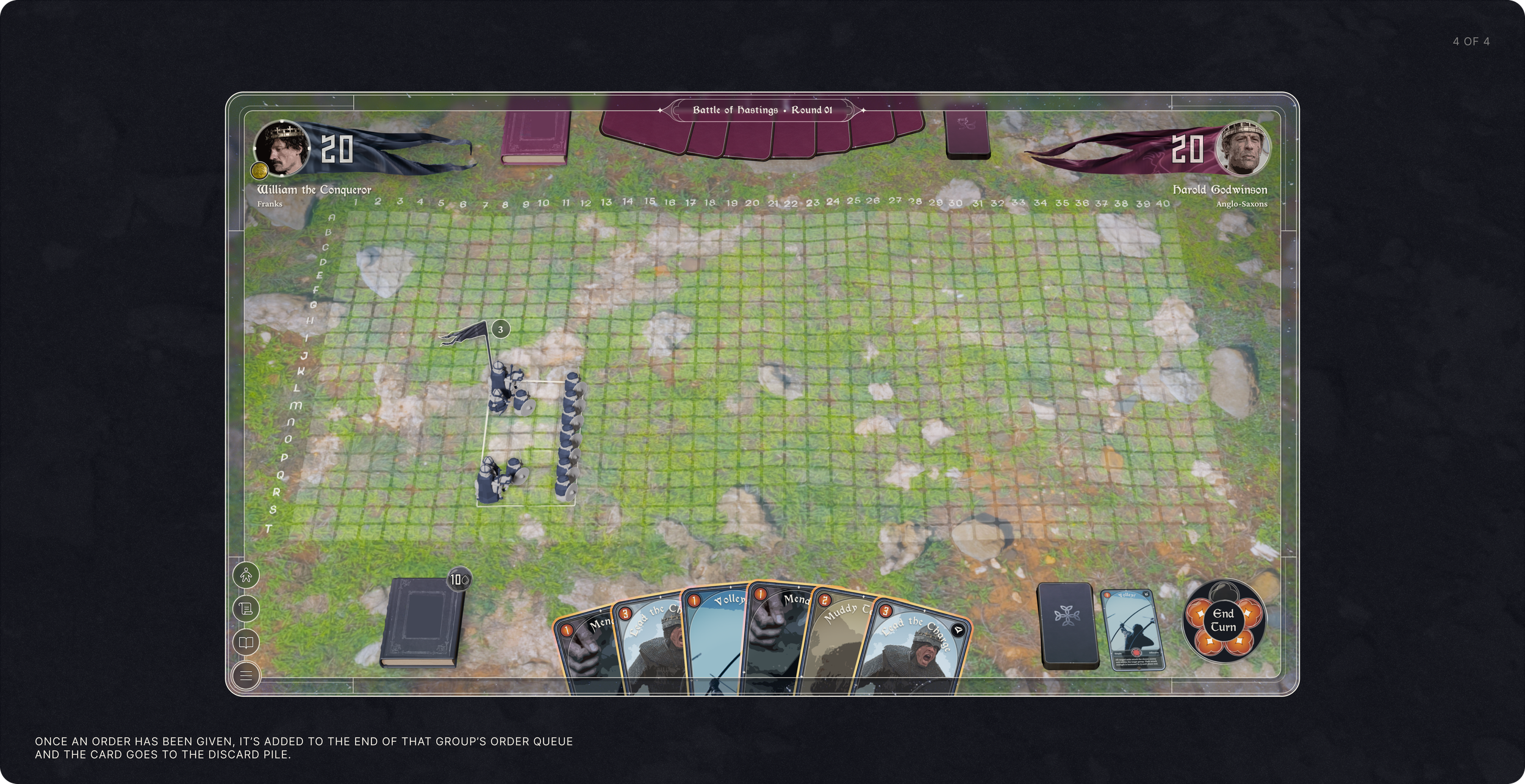
The battlefield is where the core gameplay loop occurs. Related information and similar actions are grouped together by zone to reduce cognitive load on the player.
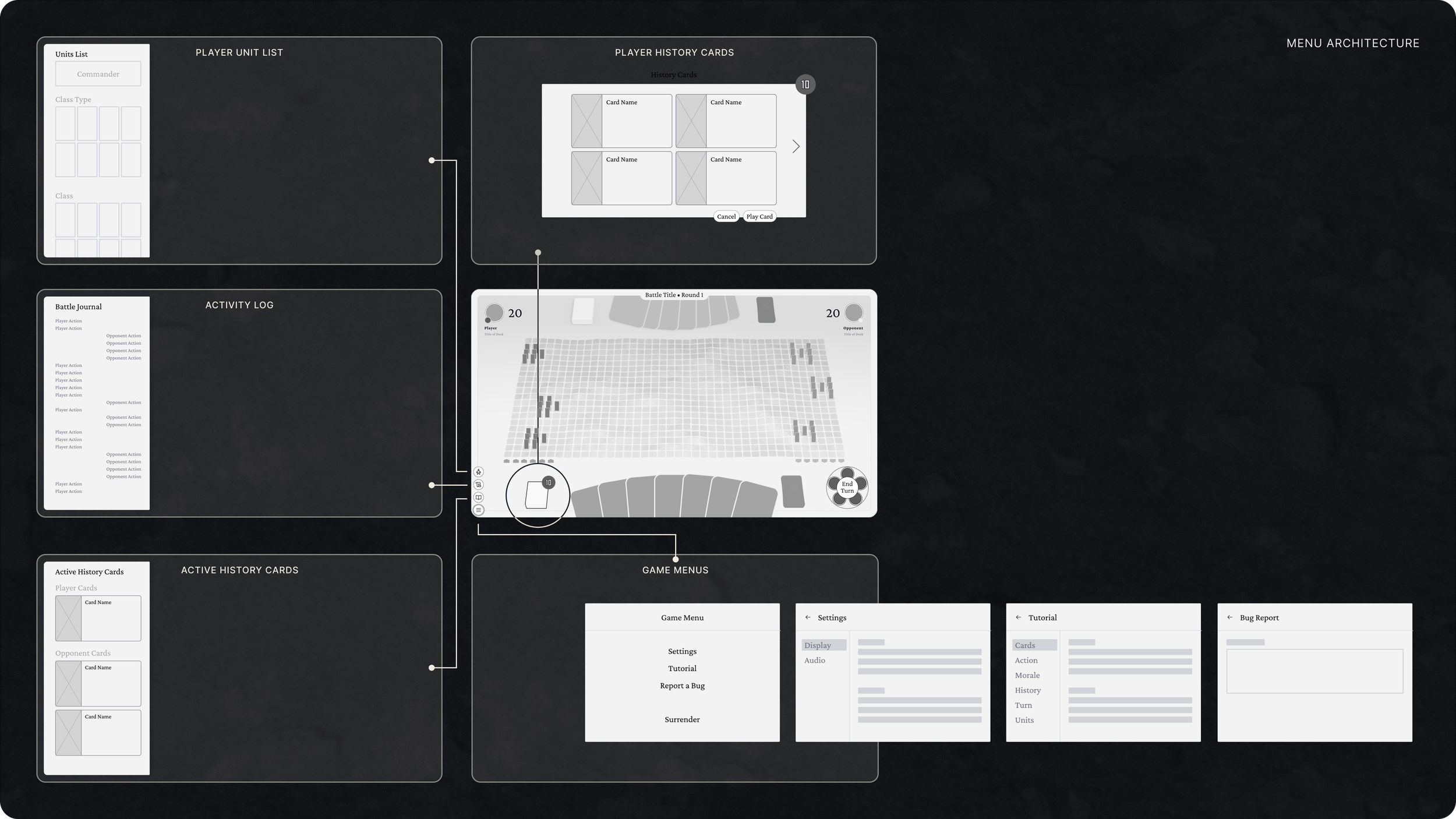
All menus can be summoned from the bottom left corner of the frame. The Player’s list of units, the Activity Log (record of actions taken), and the Active History Cards are in fly-out menus for quick access.
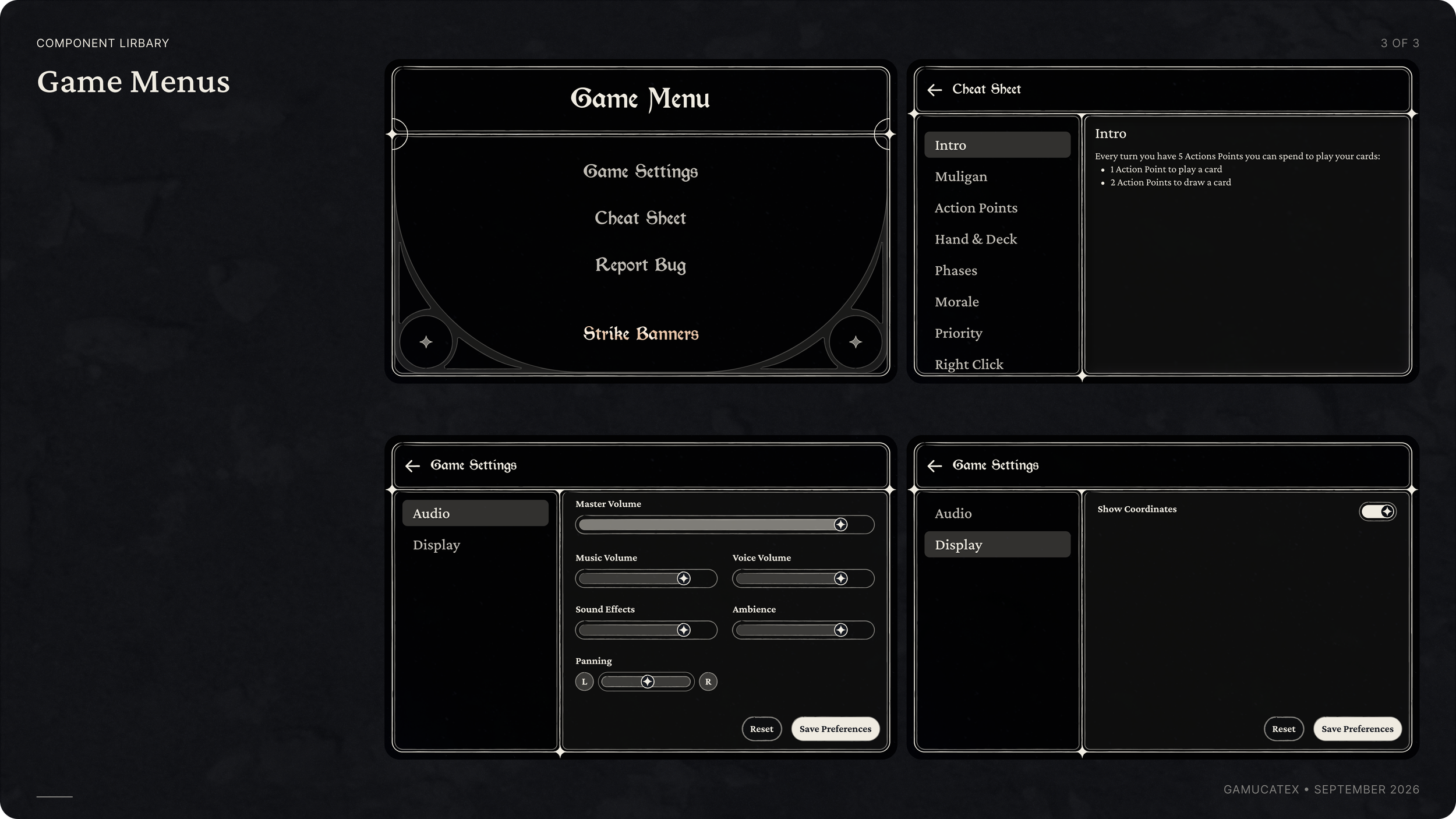
The main menu in the corner-most position contains the game settings, a tutorial page, a bug report tool, and a surrender button.
Menu ARchitecture
Playing a turN
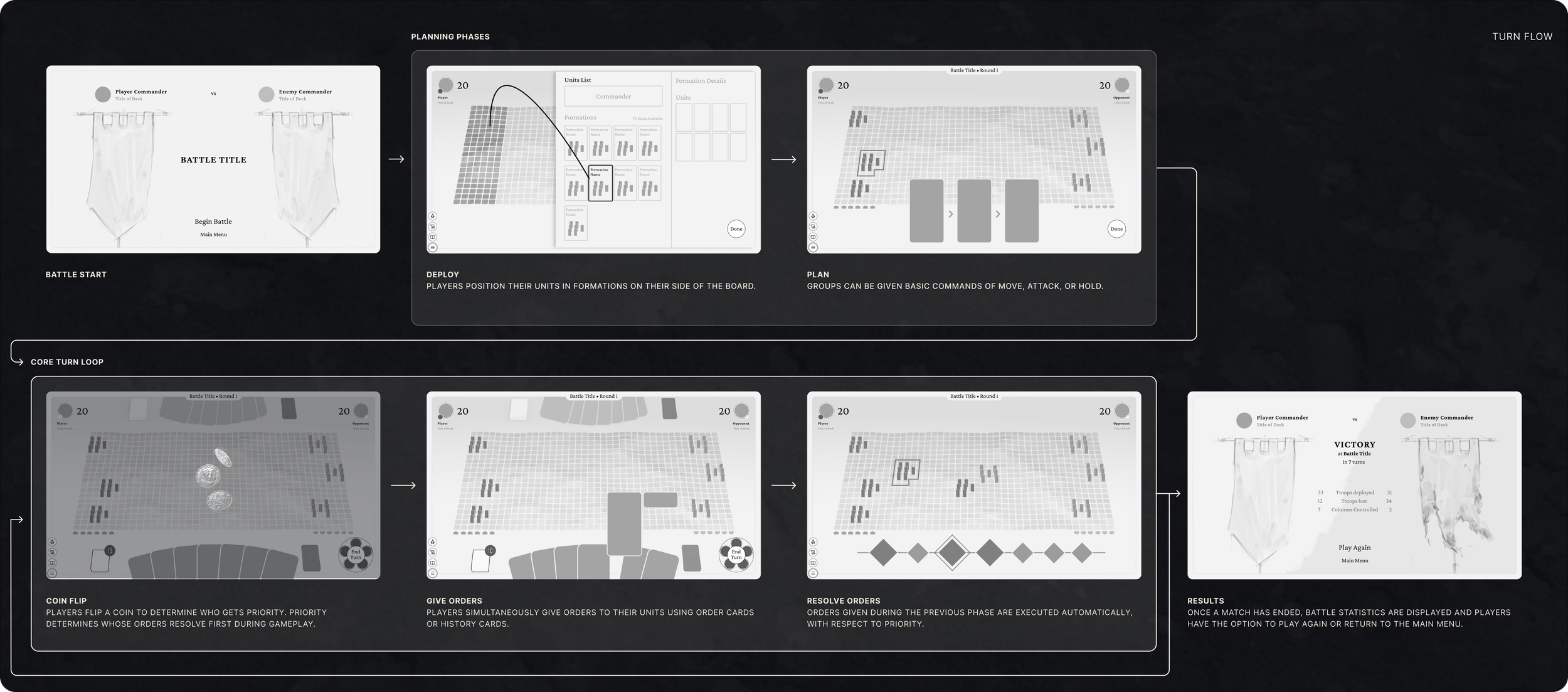
A turn during a match is made up of two phases. During the Order phase, players simultaneously give their groups of units commands via the Order Cards from t.
These orders are then executed automatically during the following Resolution phase. Turns continue until one player’s morale score reaches 0.
UI Elements
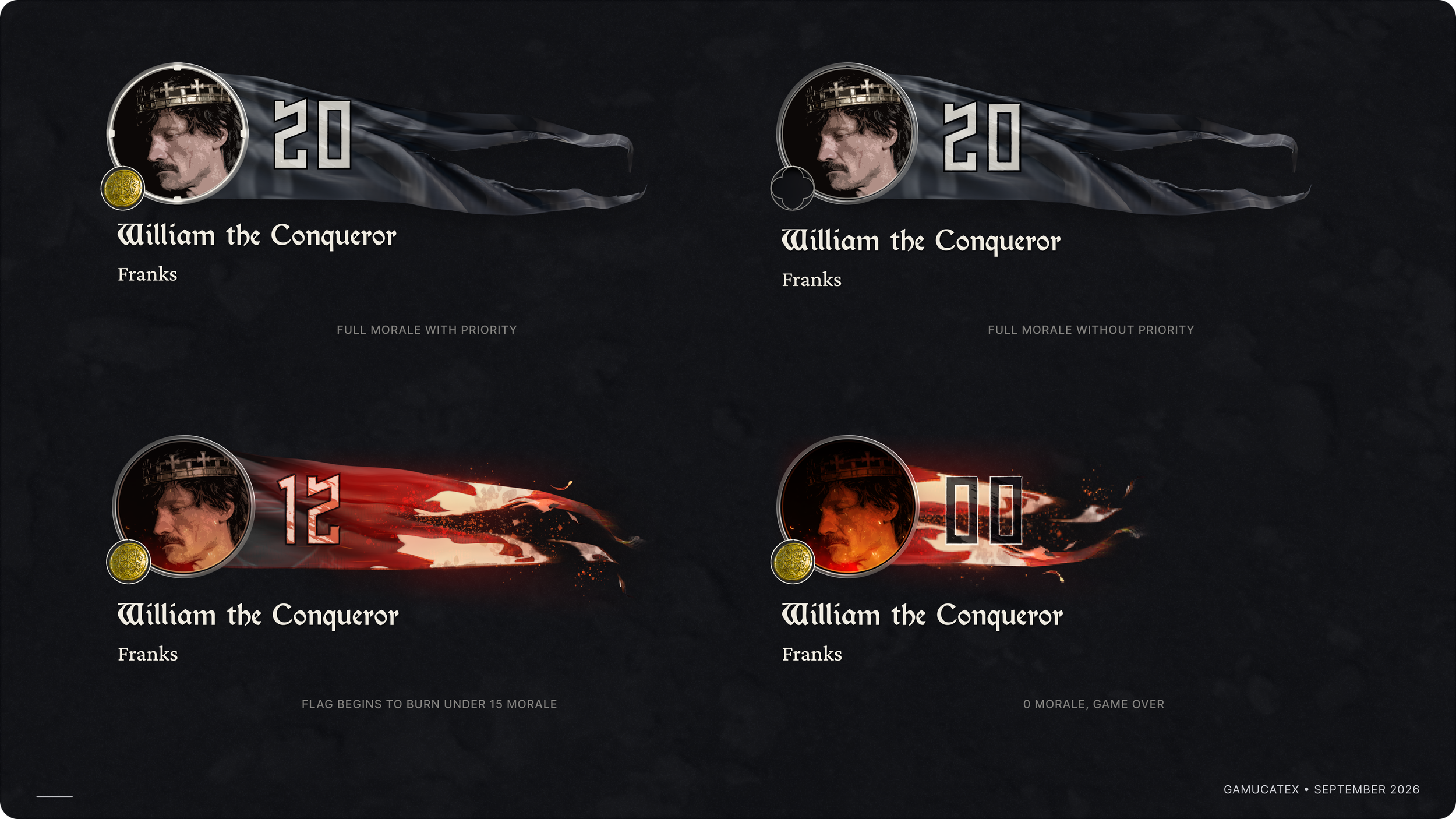
Morale Banner
Players’ score is called morale and dips when they lose units or territory. Their banner begins to burn at 15 and continues to degrade until it hits 0.
A Coin in the button corner indicates if that player has priority this turn, meaning their actions resolve first.
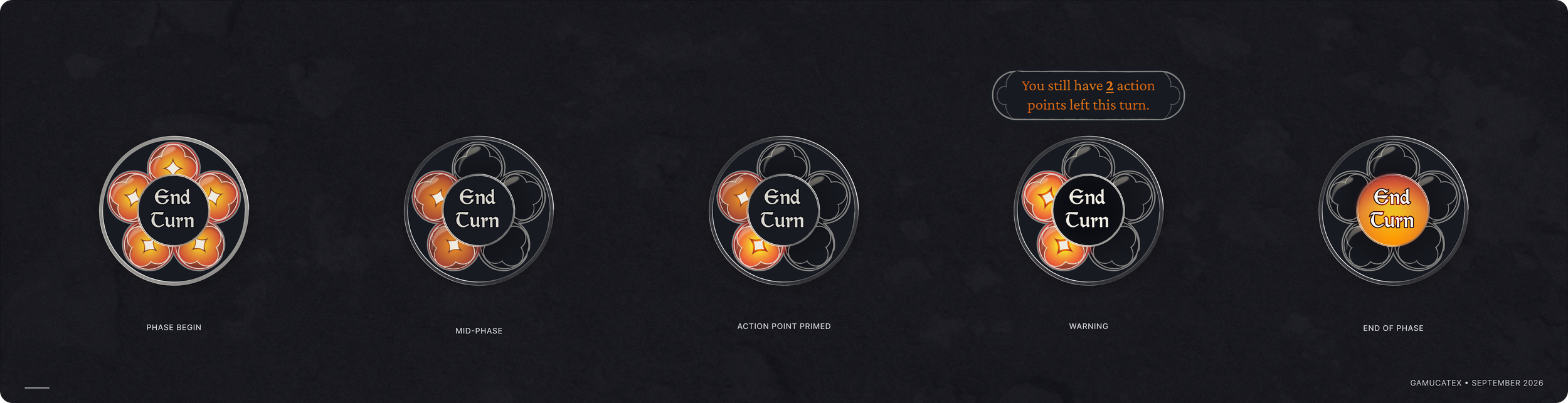
Action Points
A player has 5 action points to spend on a turn, which can be used to draw cards or give Orders. When a player runs out of Action Points, it’s time for them to end their turn.
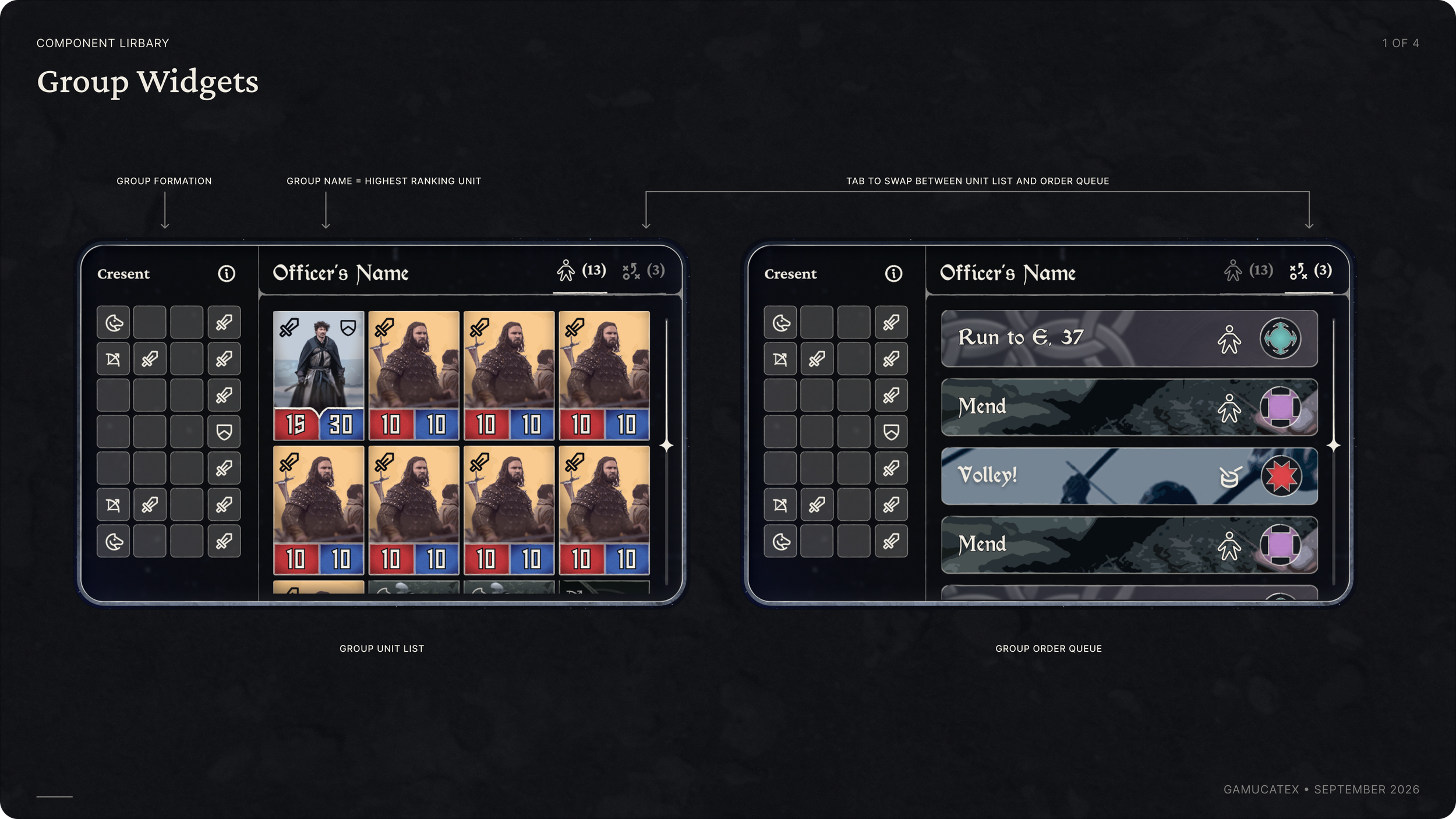
Groups
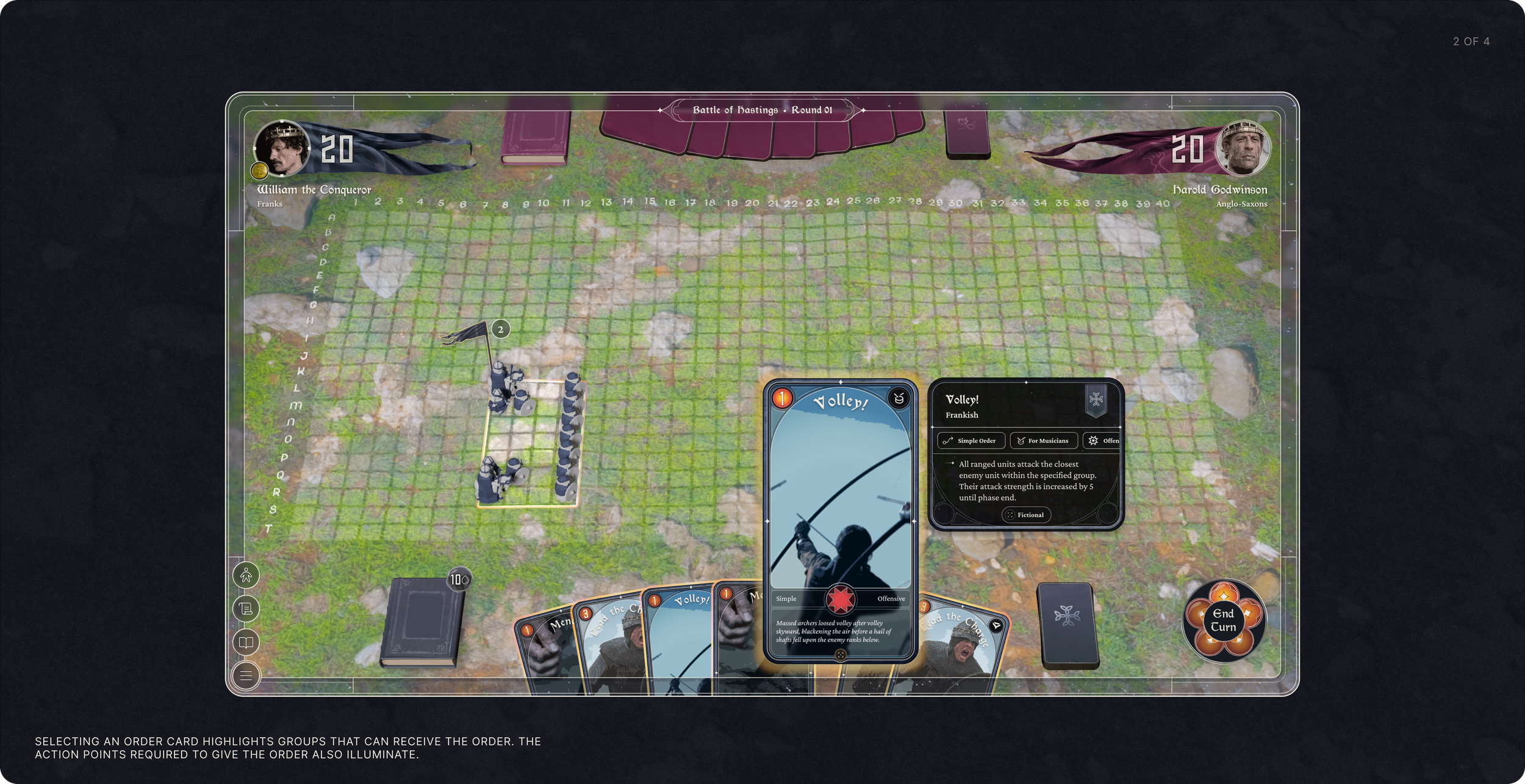
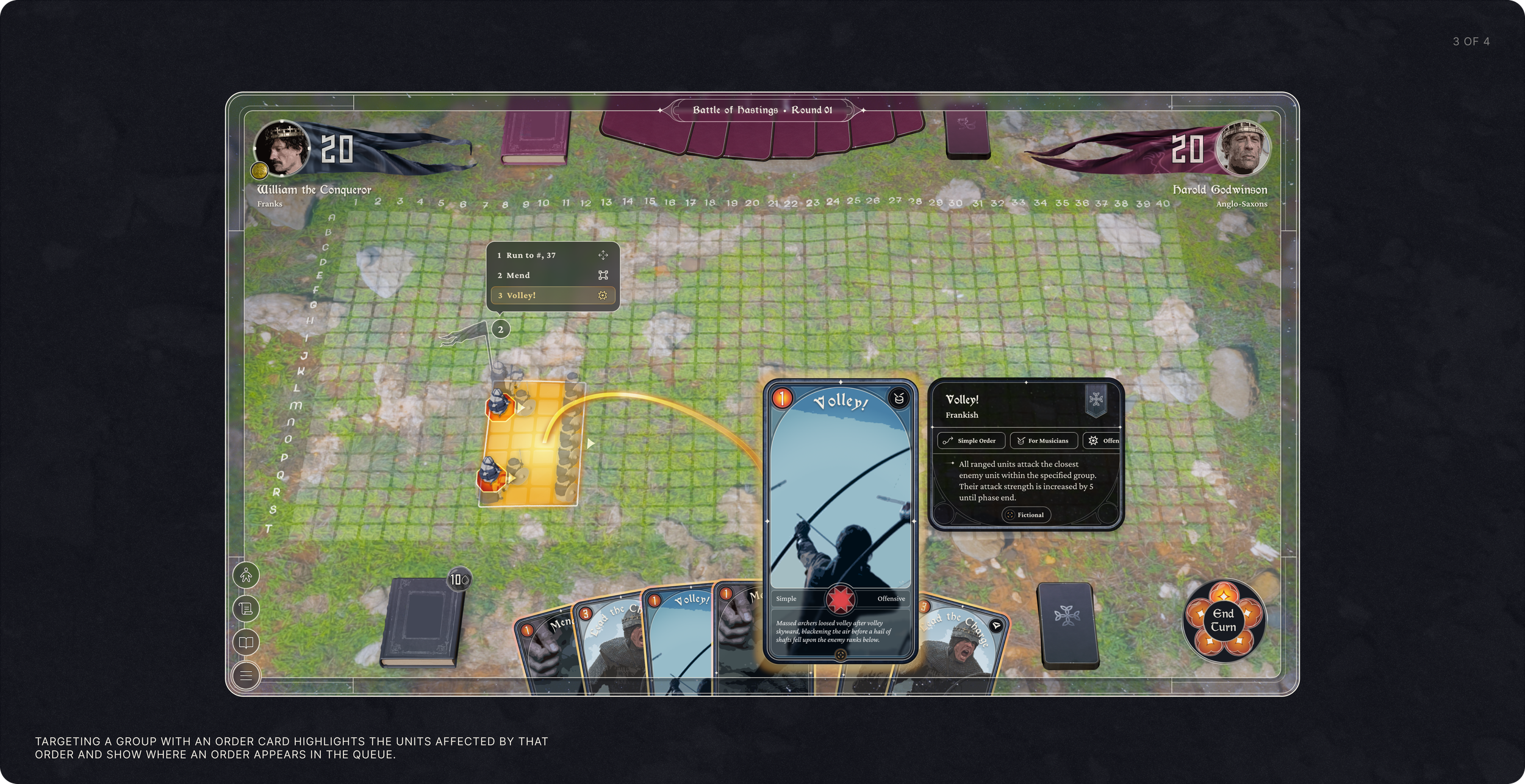
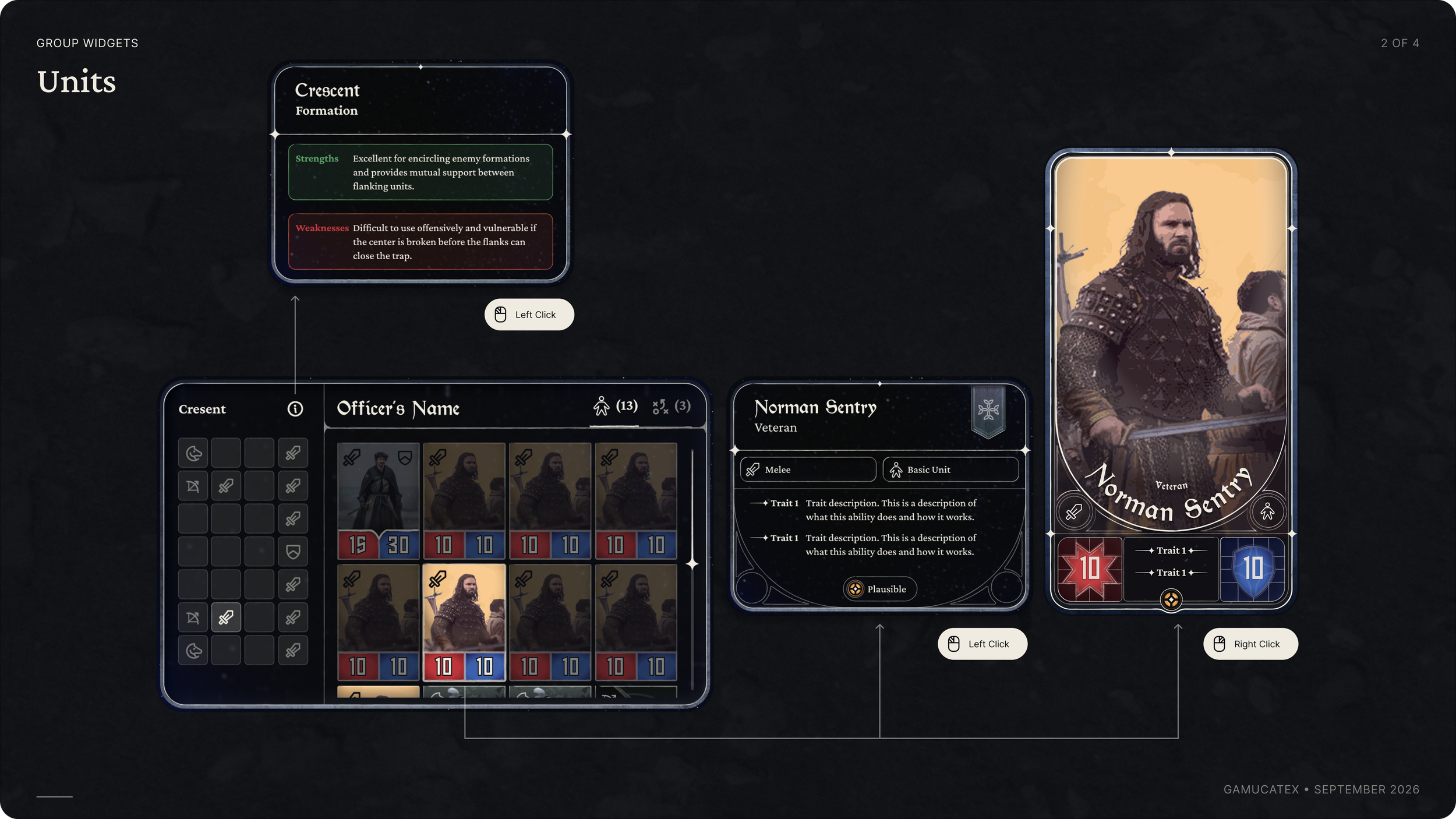
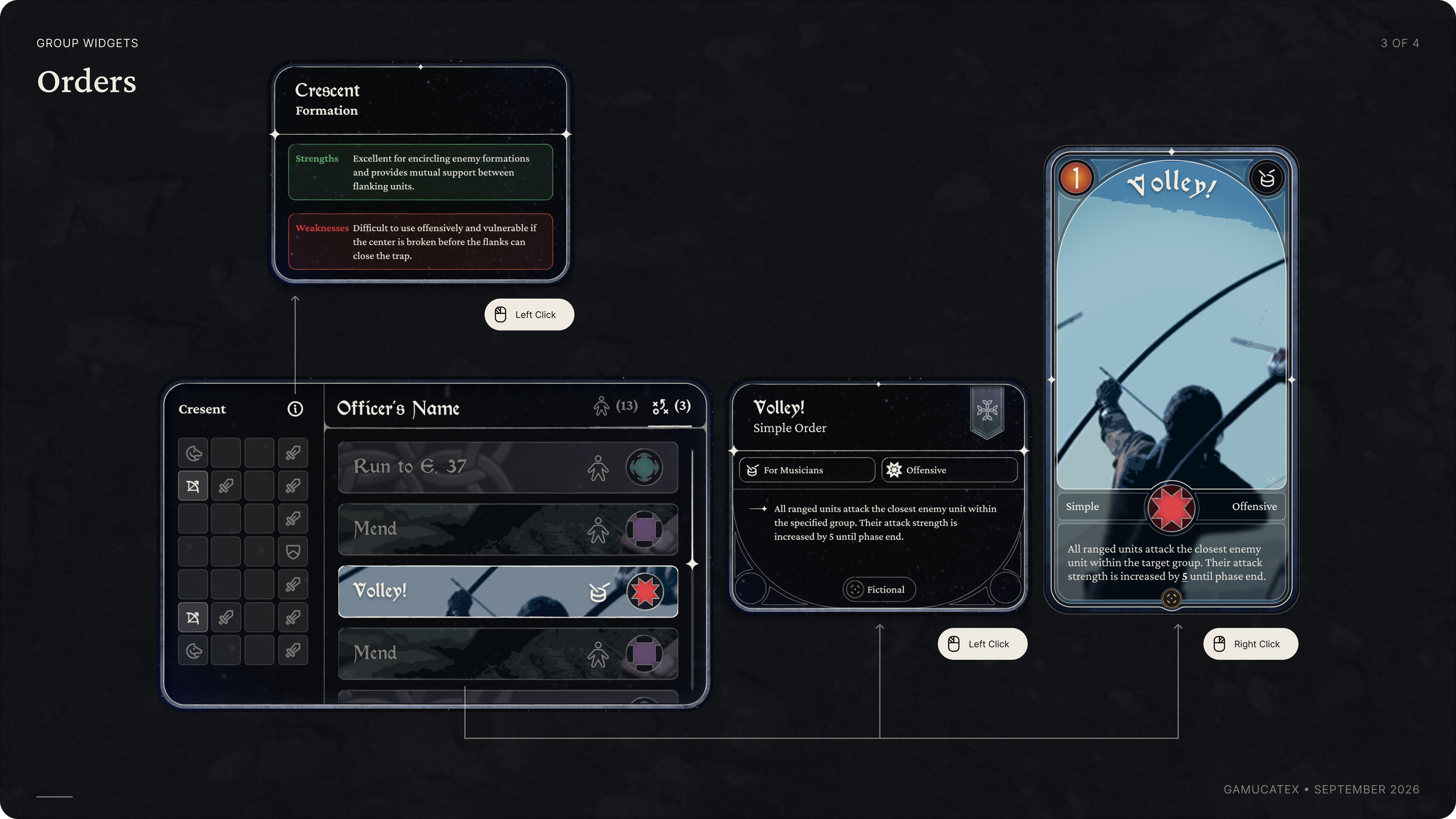
Groups in a formation are made up of several Units and hold Orders given to them during gameplay. Hovering on a group allows players to see view their details.
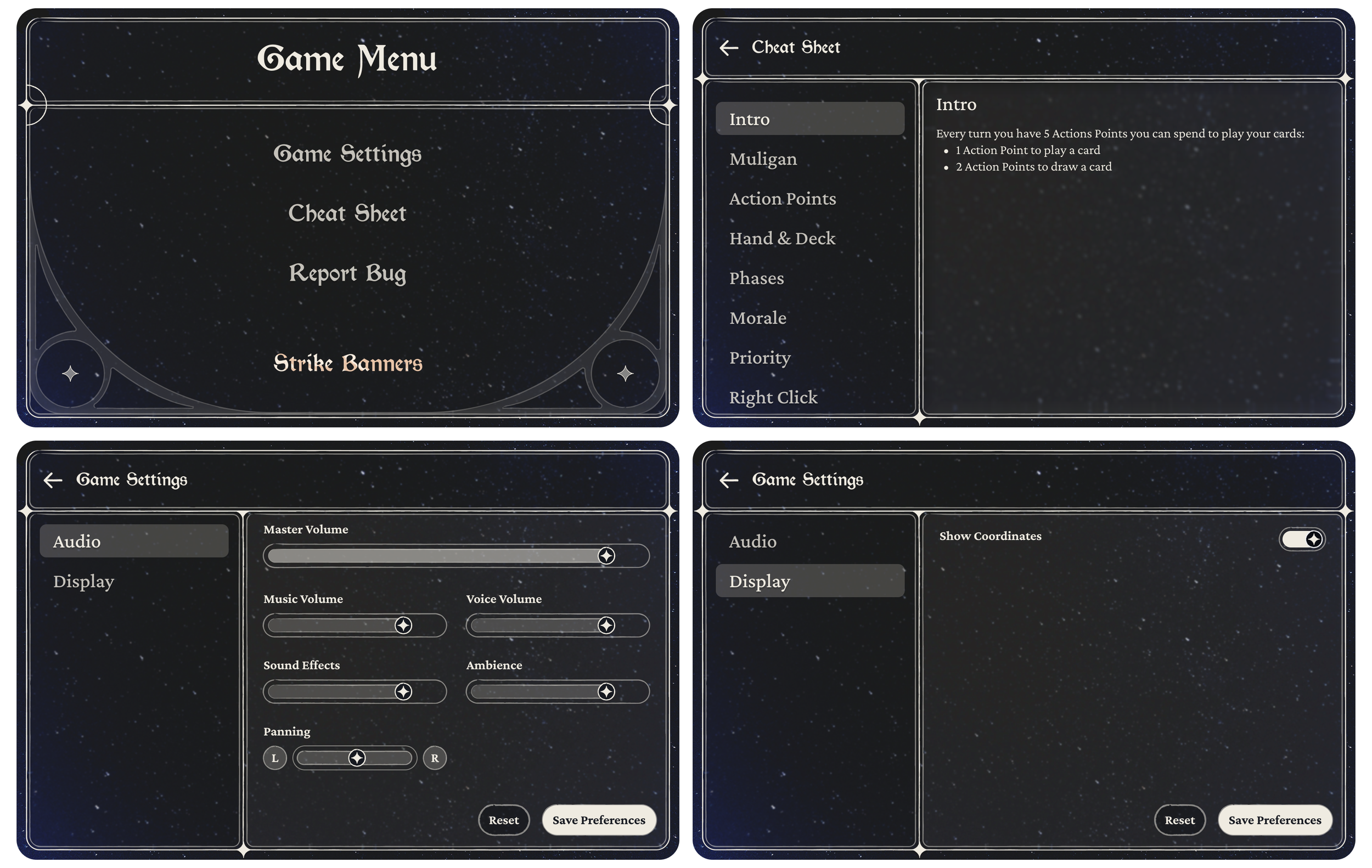
Game Menu
Game controls, settings, beg reports, and a handy tutorial are always available via the menu button locked in the corner of the player’s interaction zone.
Cards
Order Cards
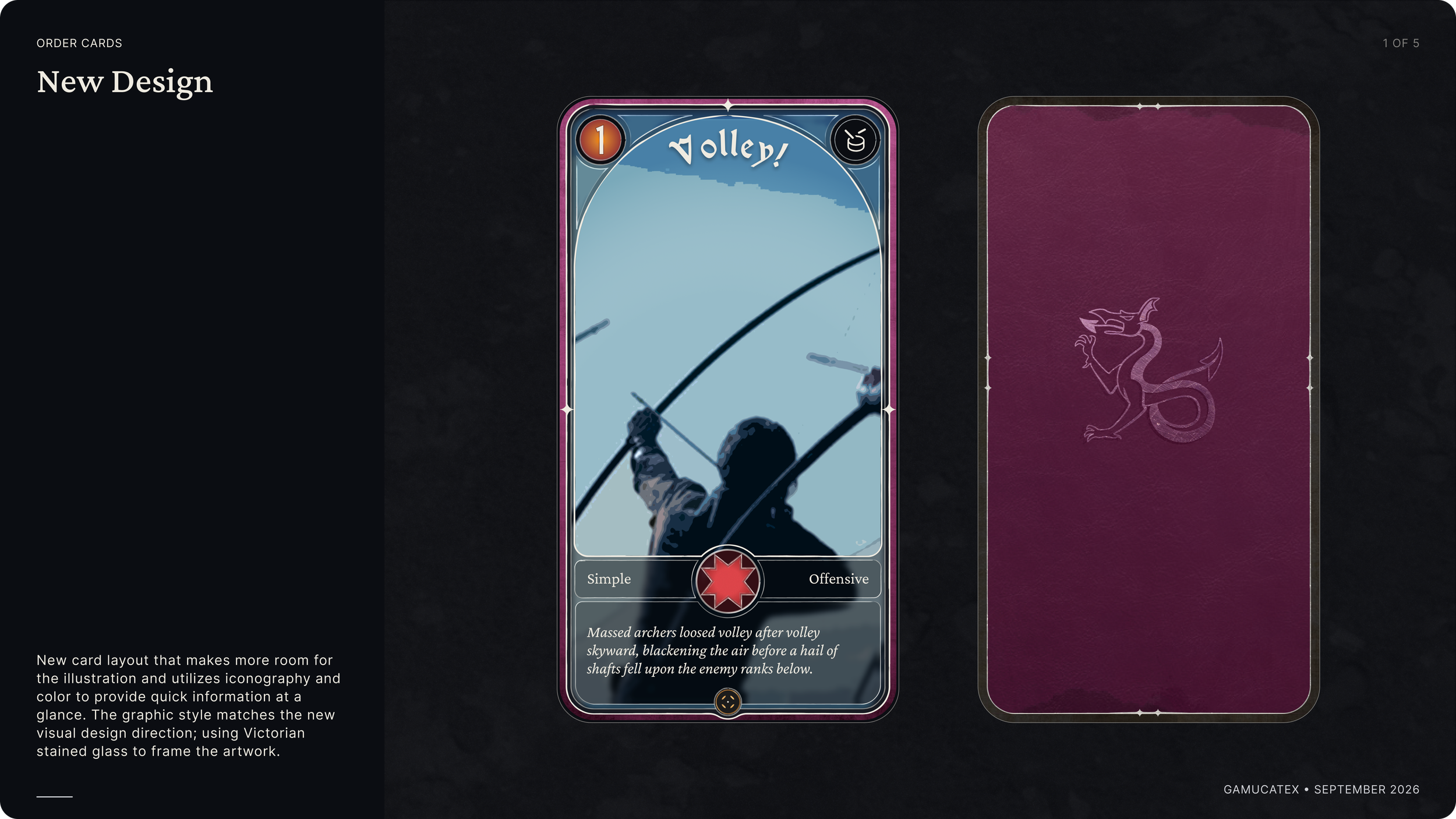
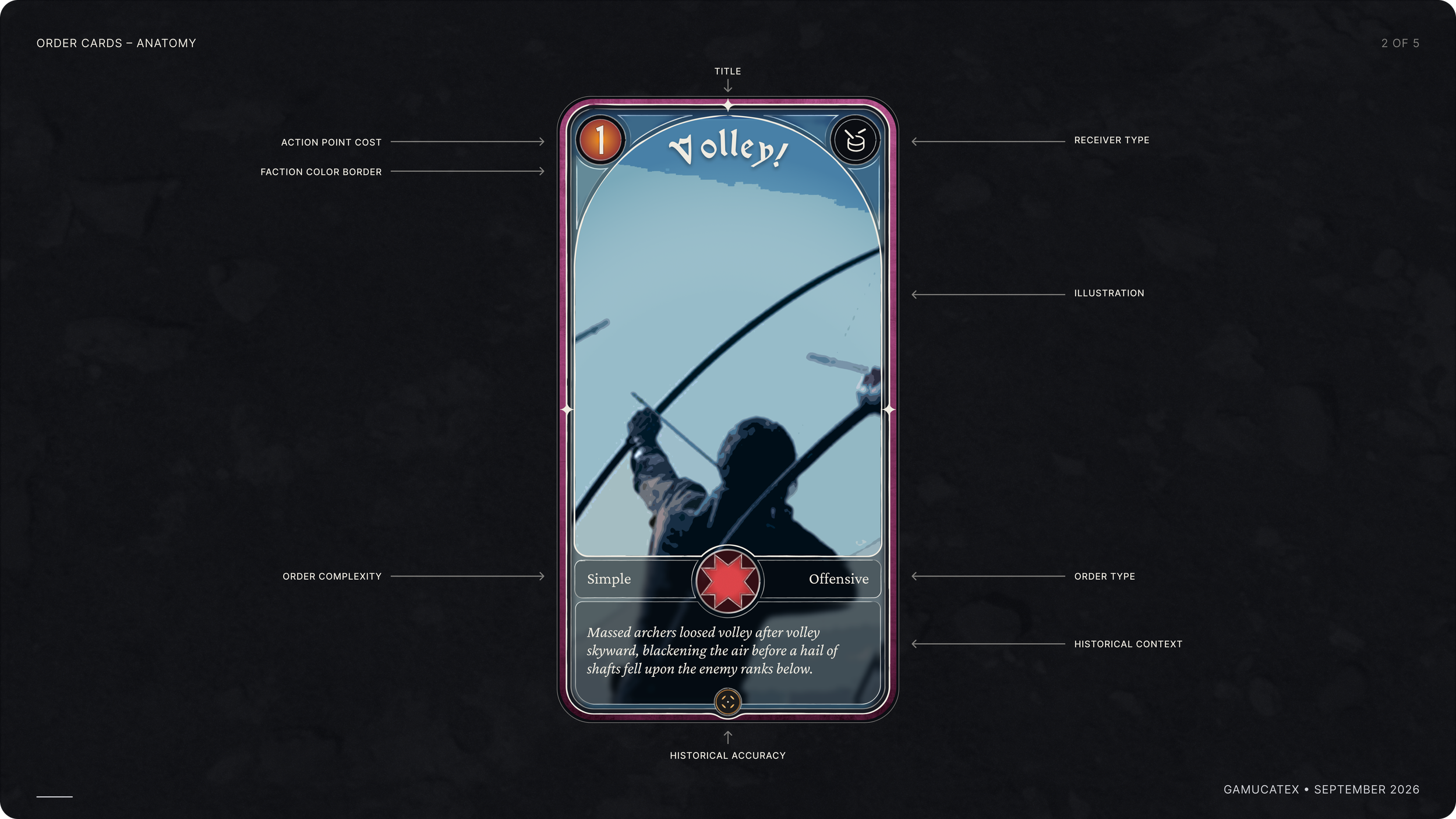
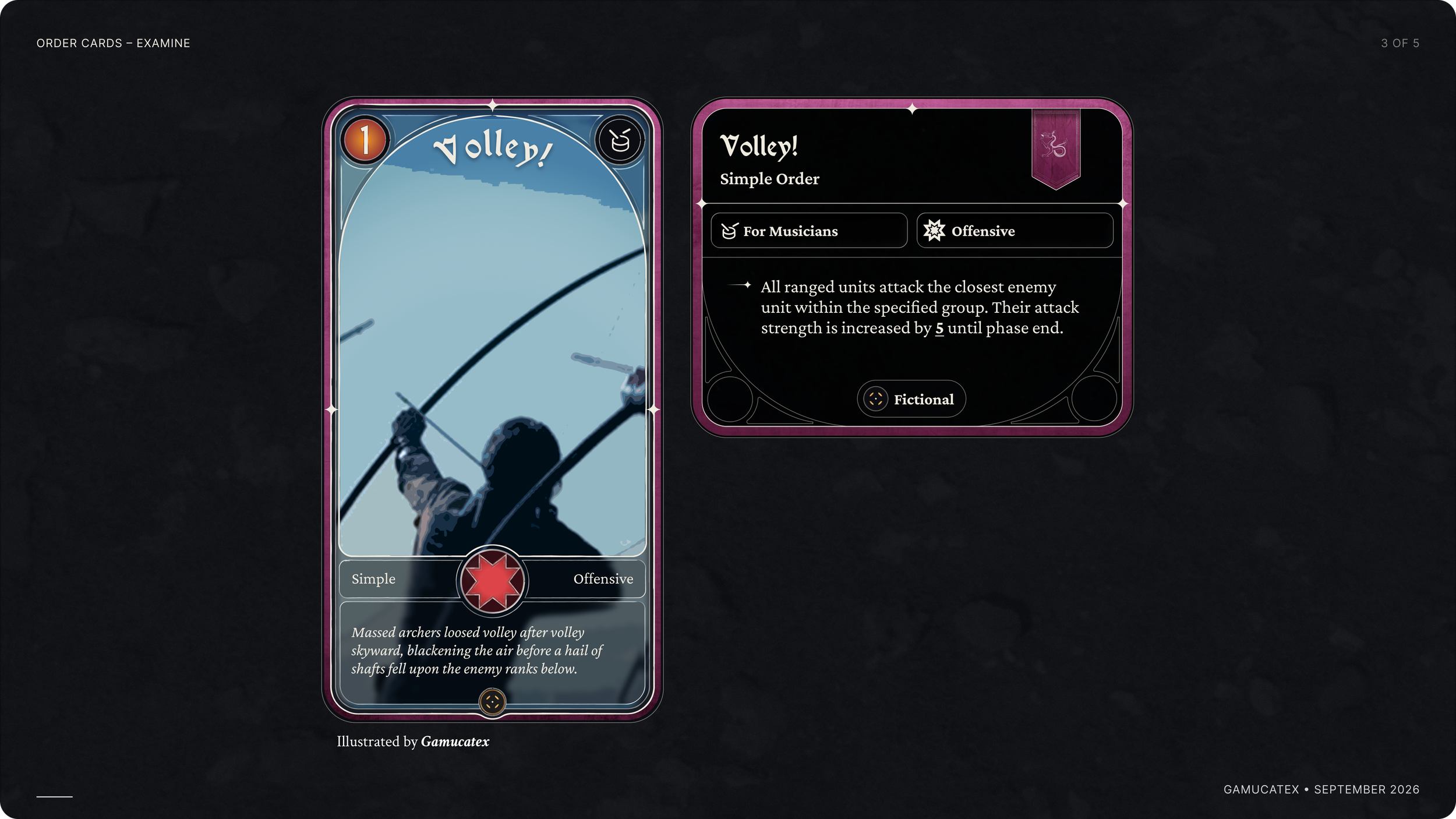
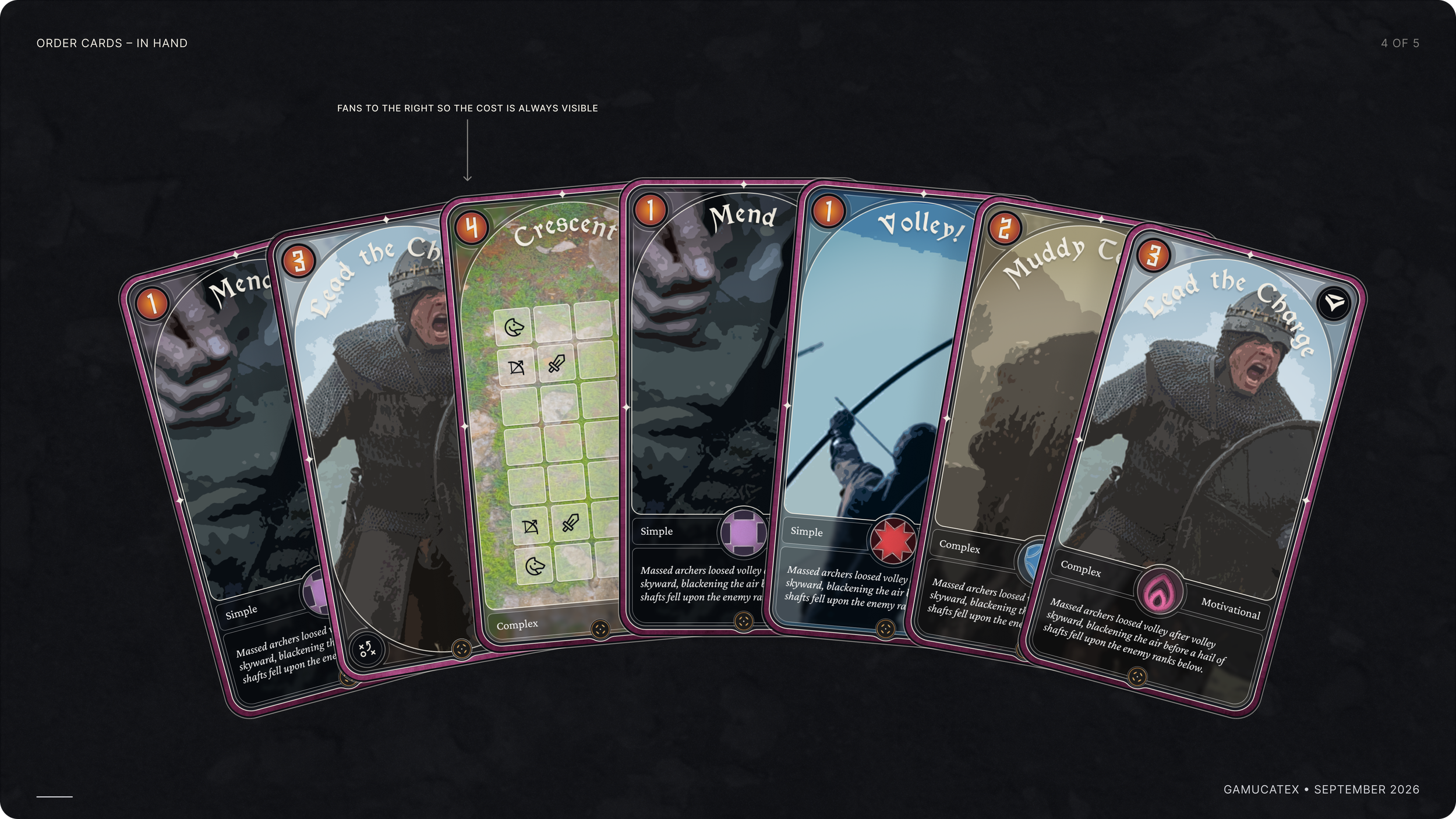
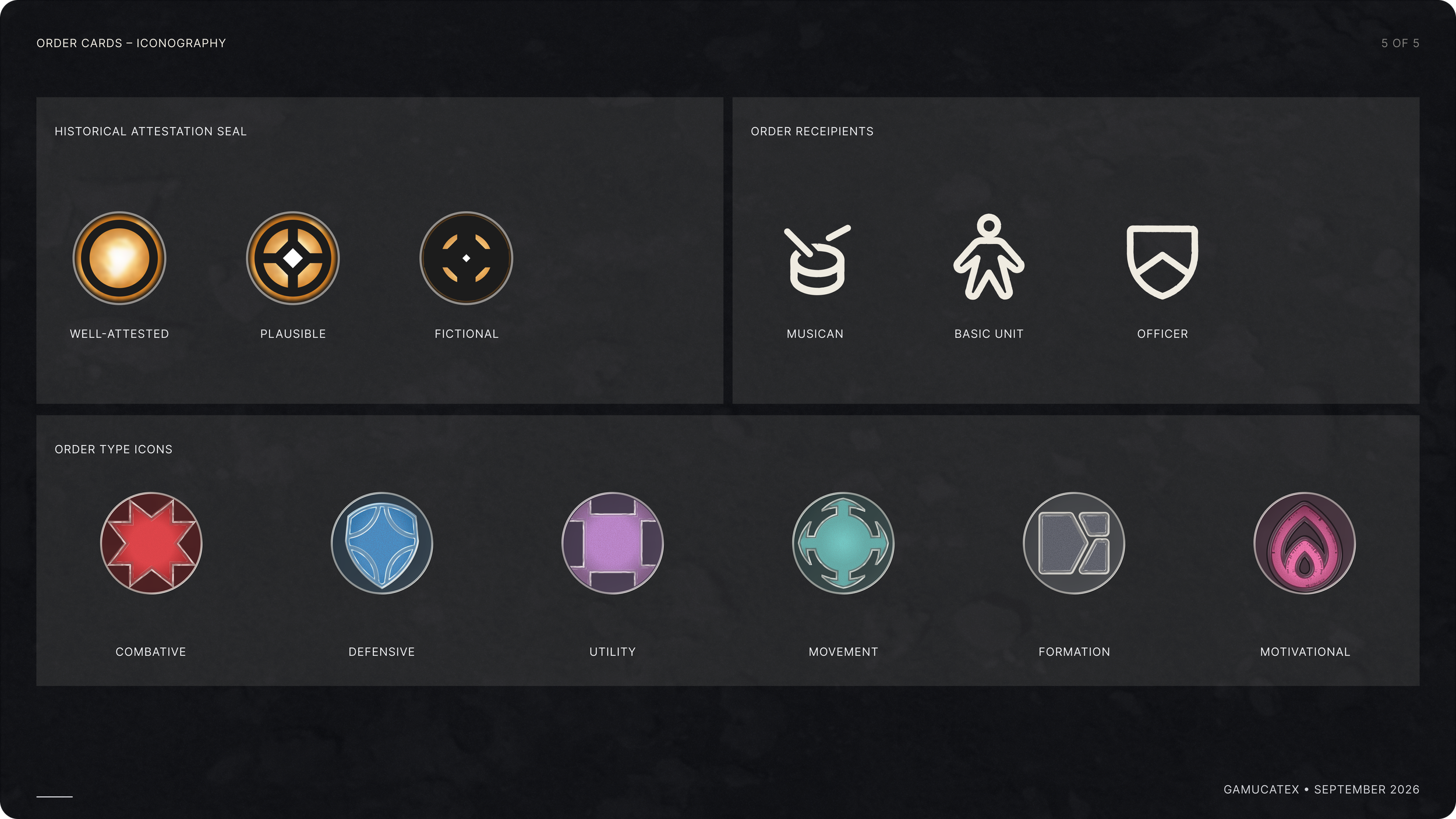
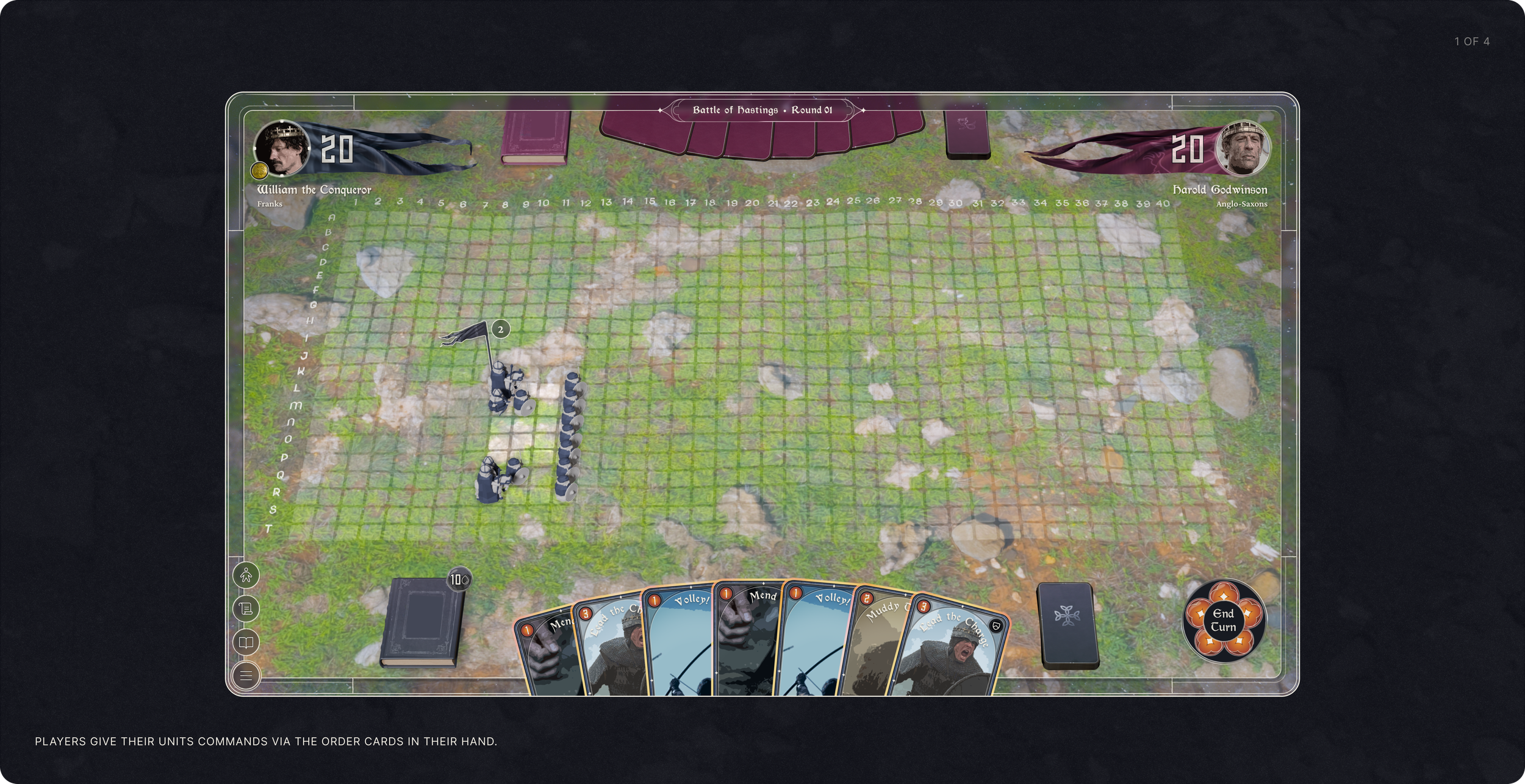
Players interact with their deployed units via Order Cards. There are several types of Orders and their use is determined by cost of Action Points, and what kind of unit can receive that order.
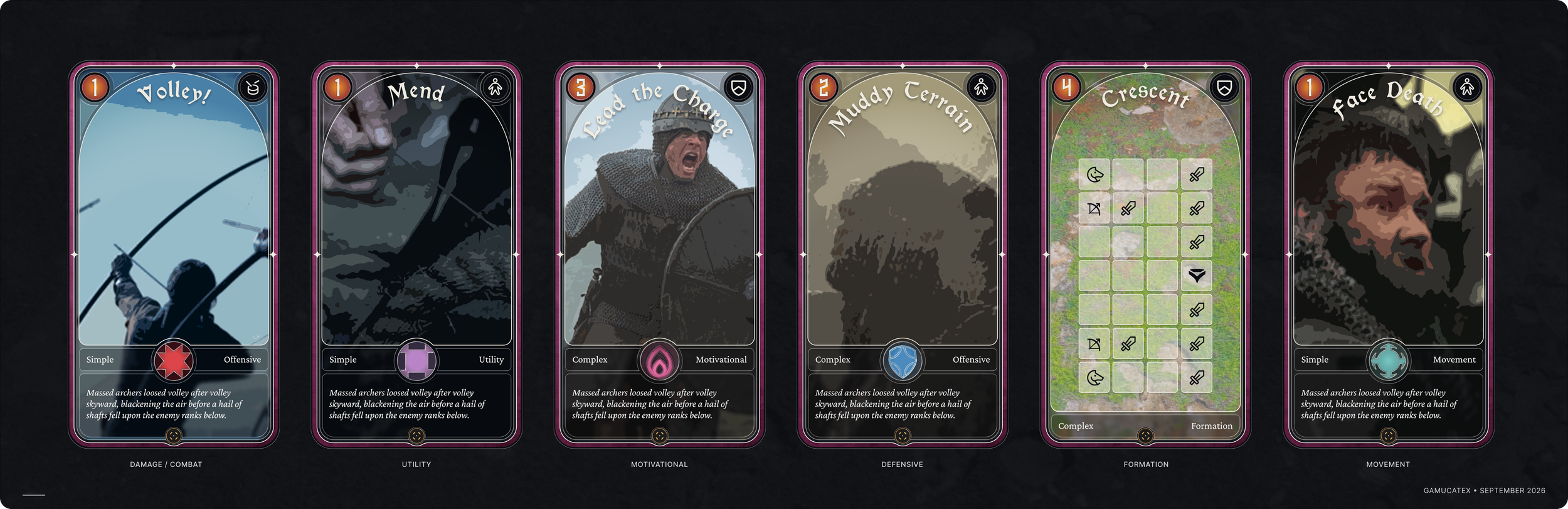
Unit Cards
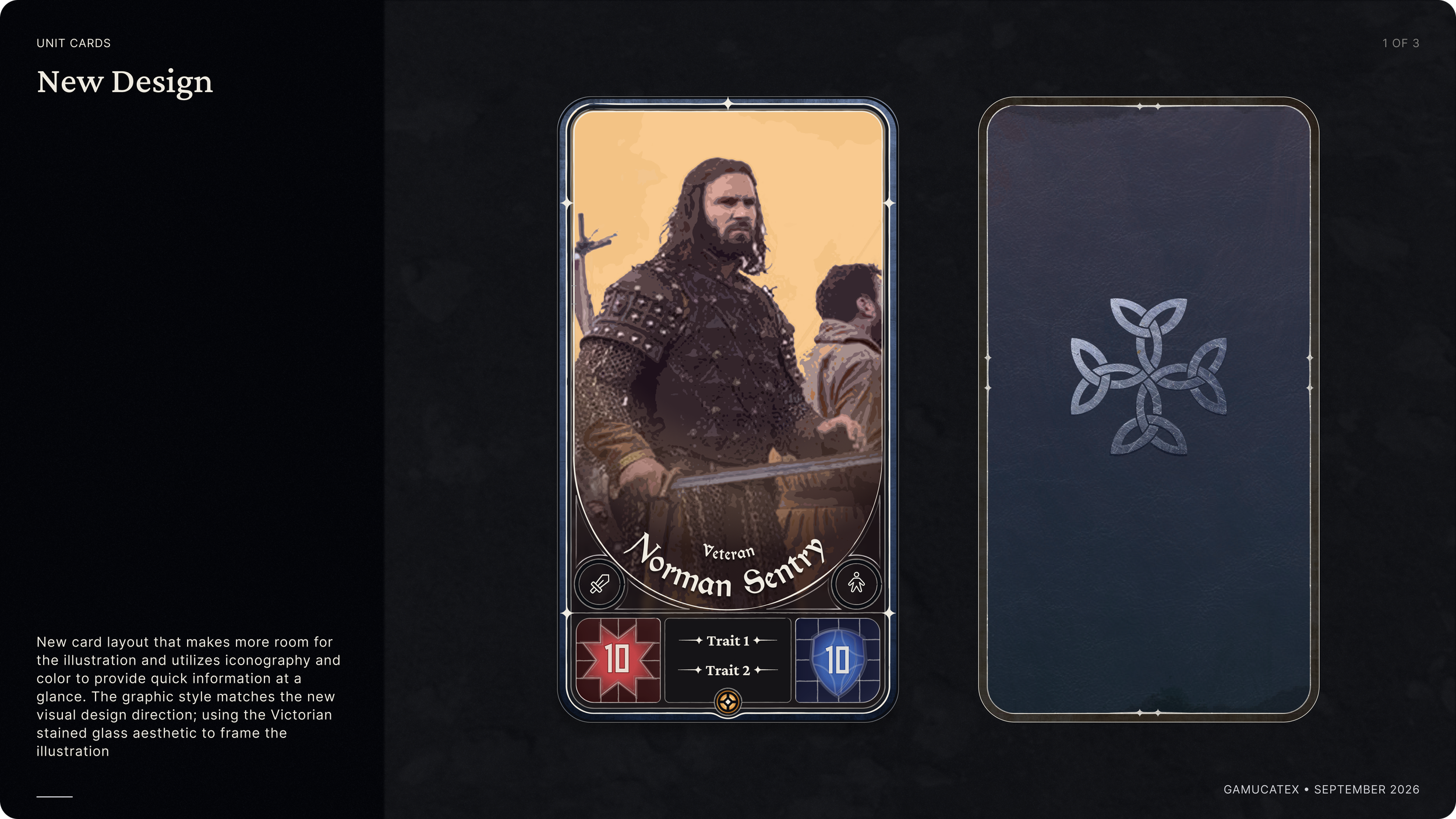
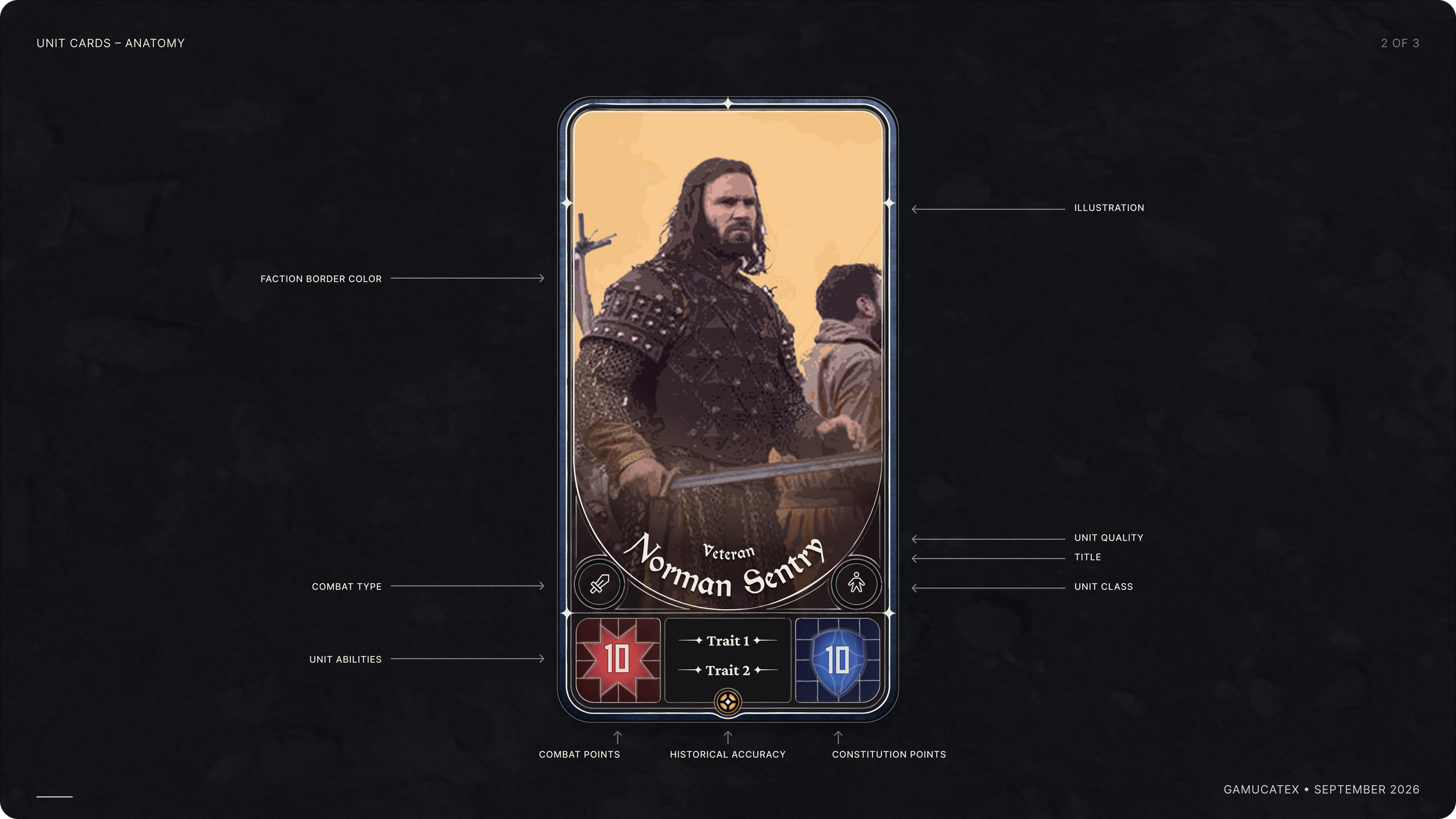
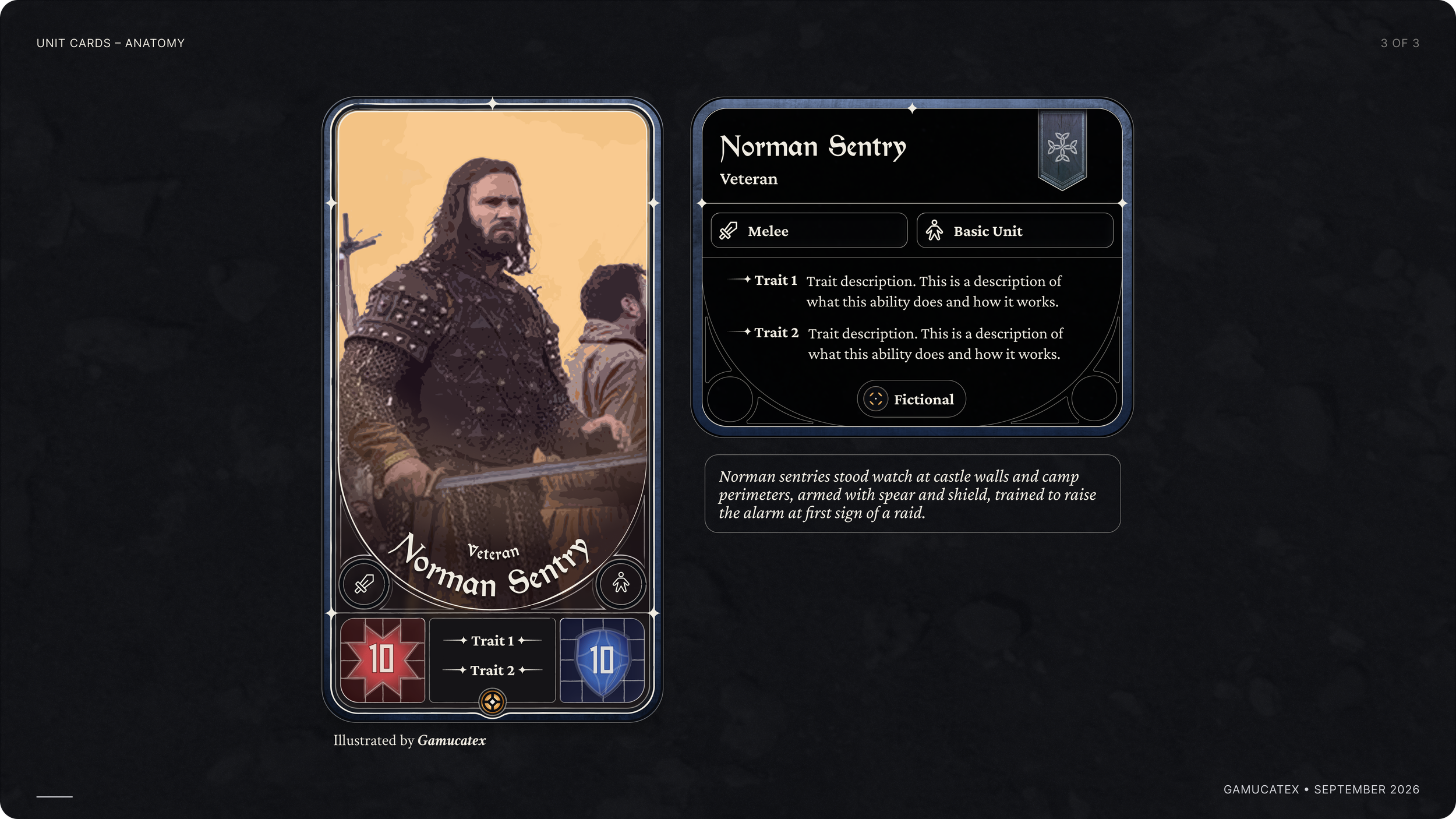
A player’s deck is made up of Unit cards, which can be melee, ranged, or cavalry combat types. Each unit has it’s own Strength and Constitution value, and some units have specific traits that grant them extra abilities.
Hand Interaction
Players can give Orders from their hand. Cards with a lit border are playable and will give more information when hovered over at length.
History Cards
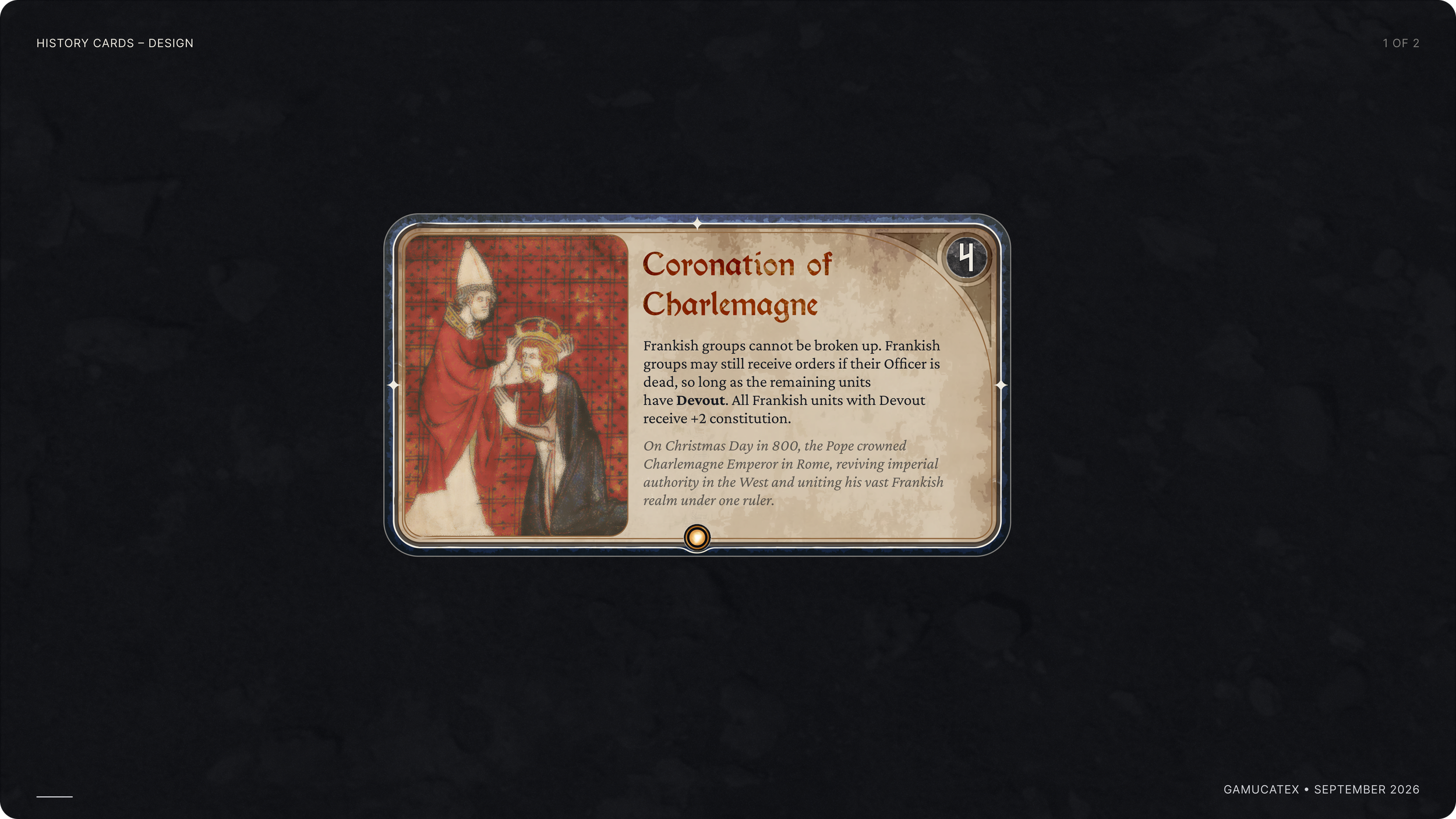
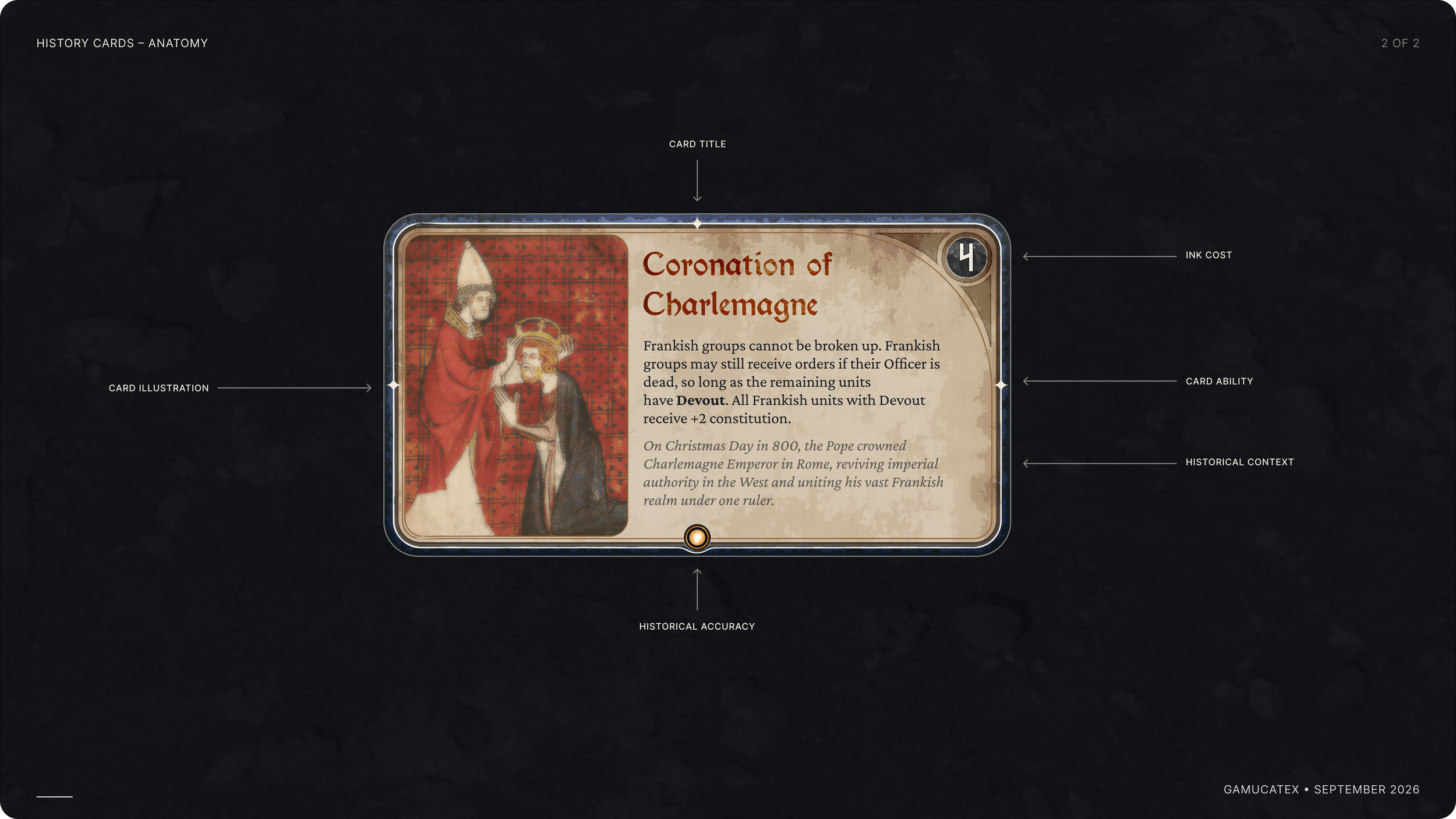
Another card with effects that can target the entire battlefield, just one player, or a specific unit type. These cards are meant to represent actual historical events and are stashed in a player’s History Book, which uses a separate resource pool called Ink.
Visual Design
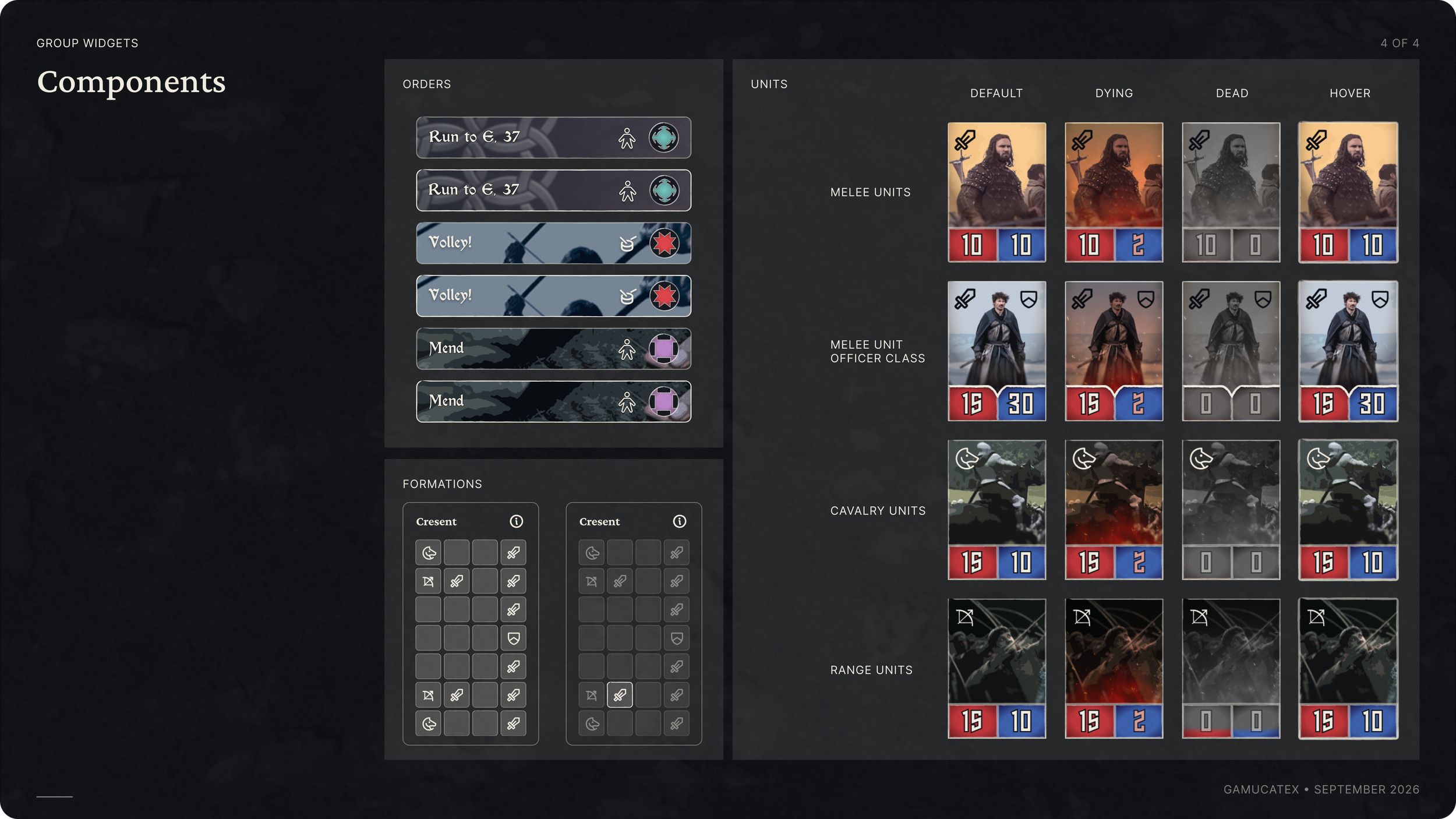
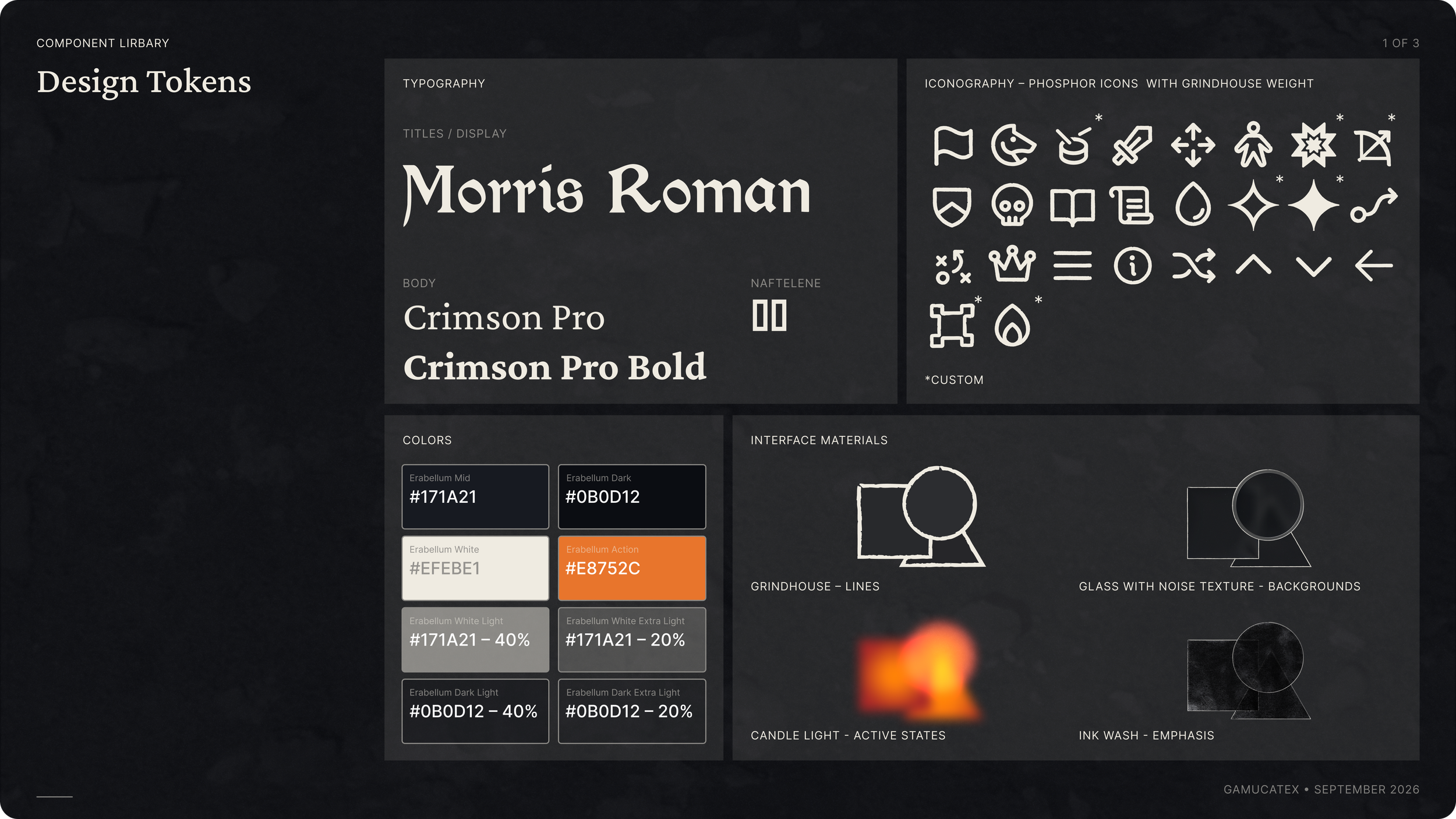
Component Library
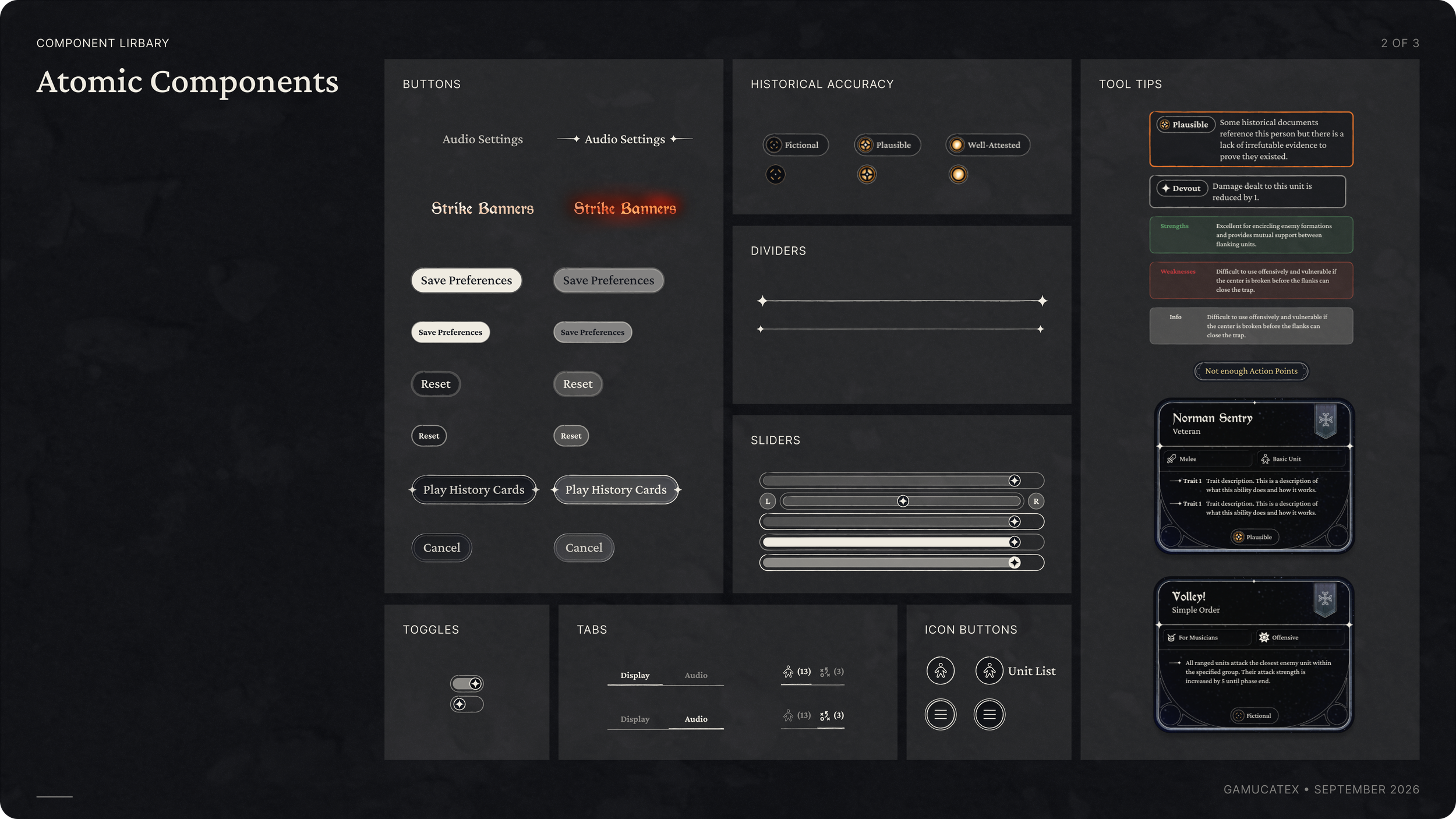
While designing the battlefield I also created a out a new visual design system and built out a component library.
Art Direction
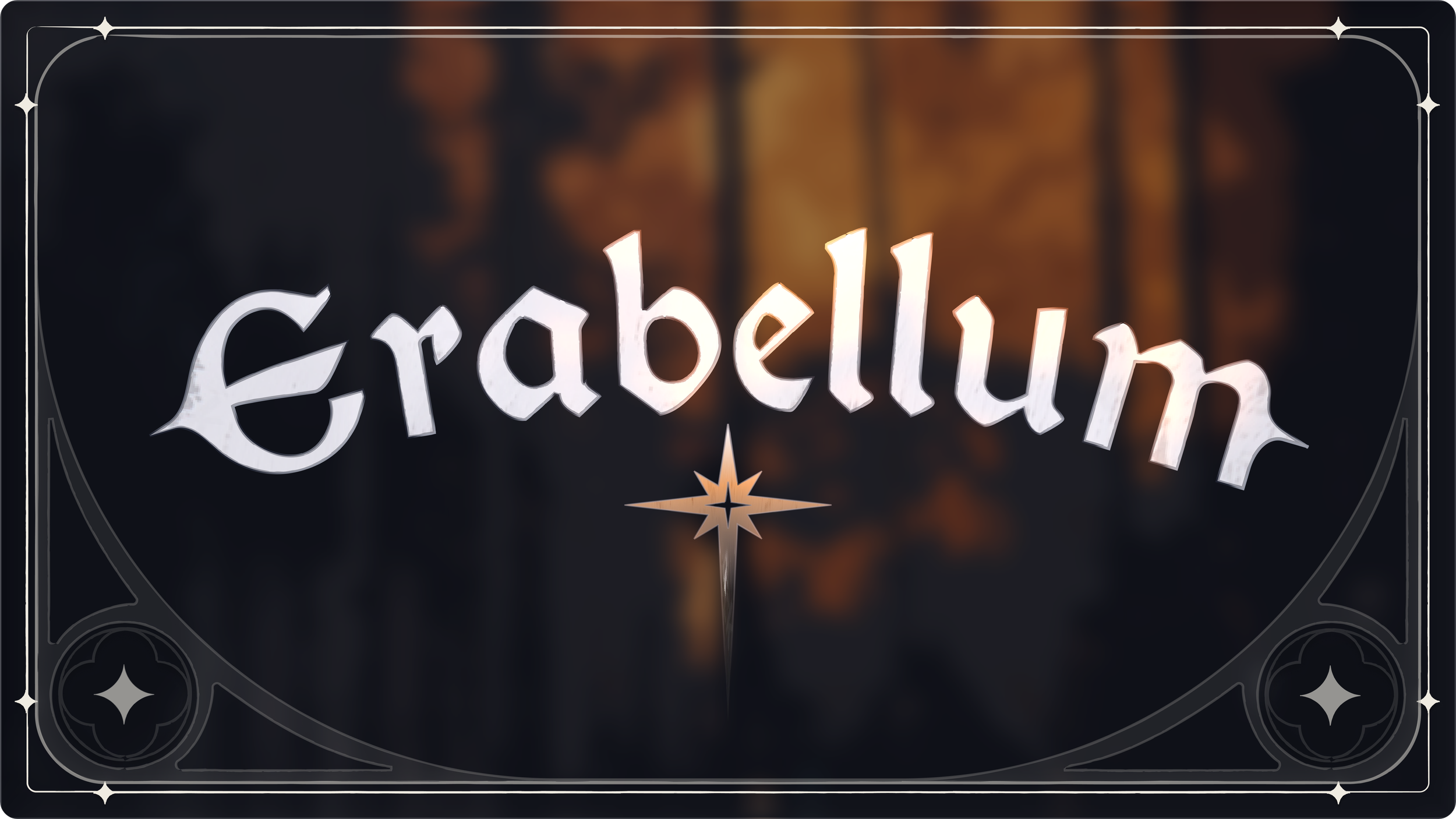
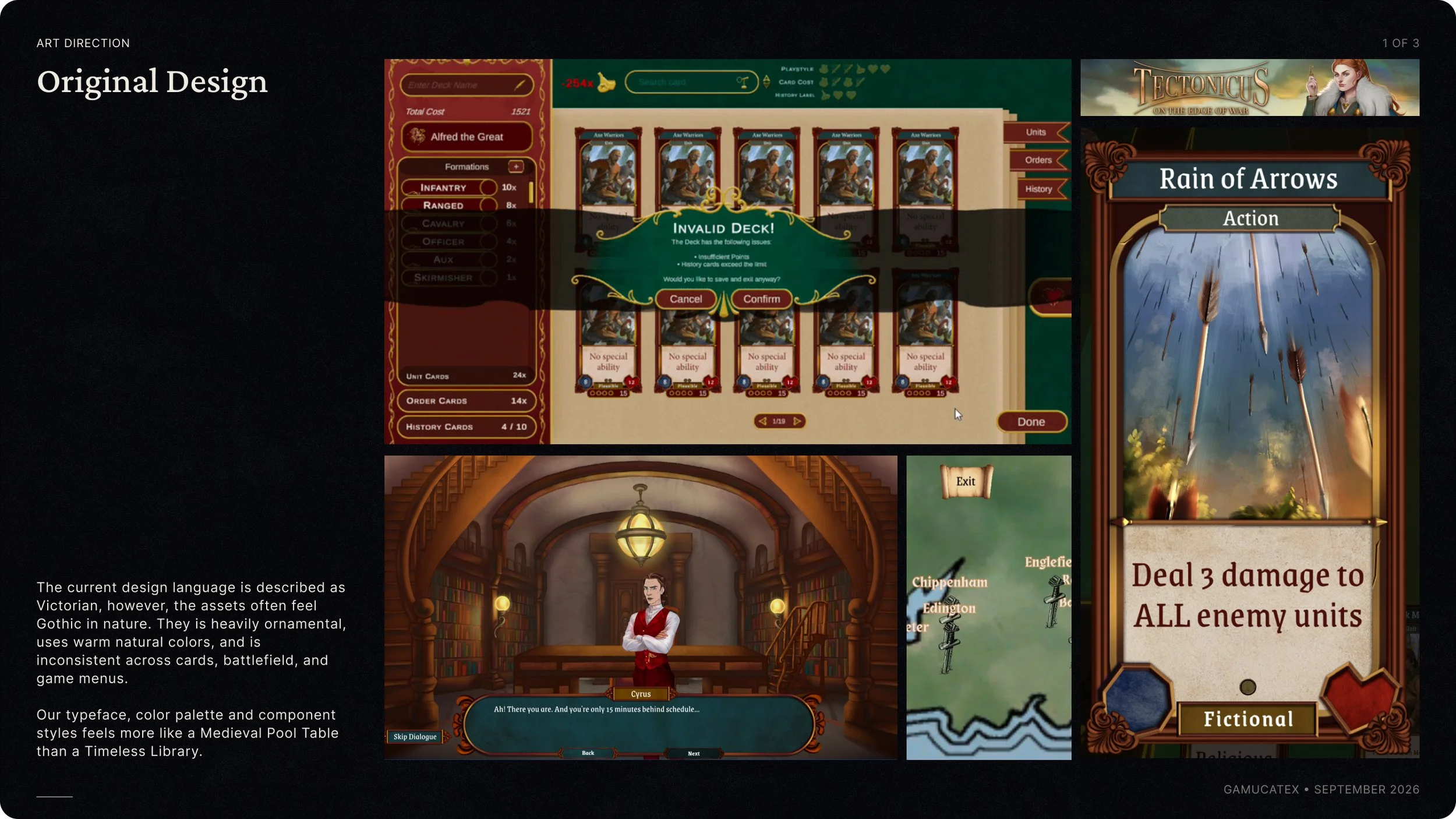
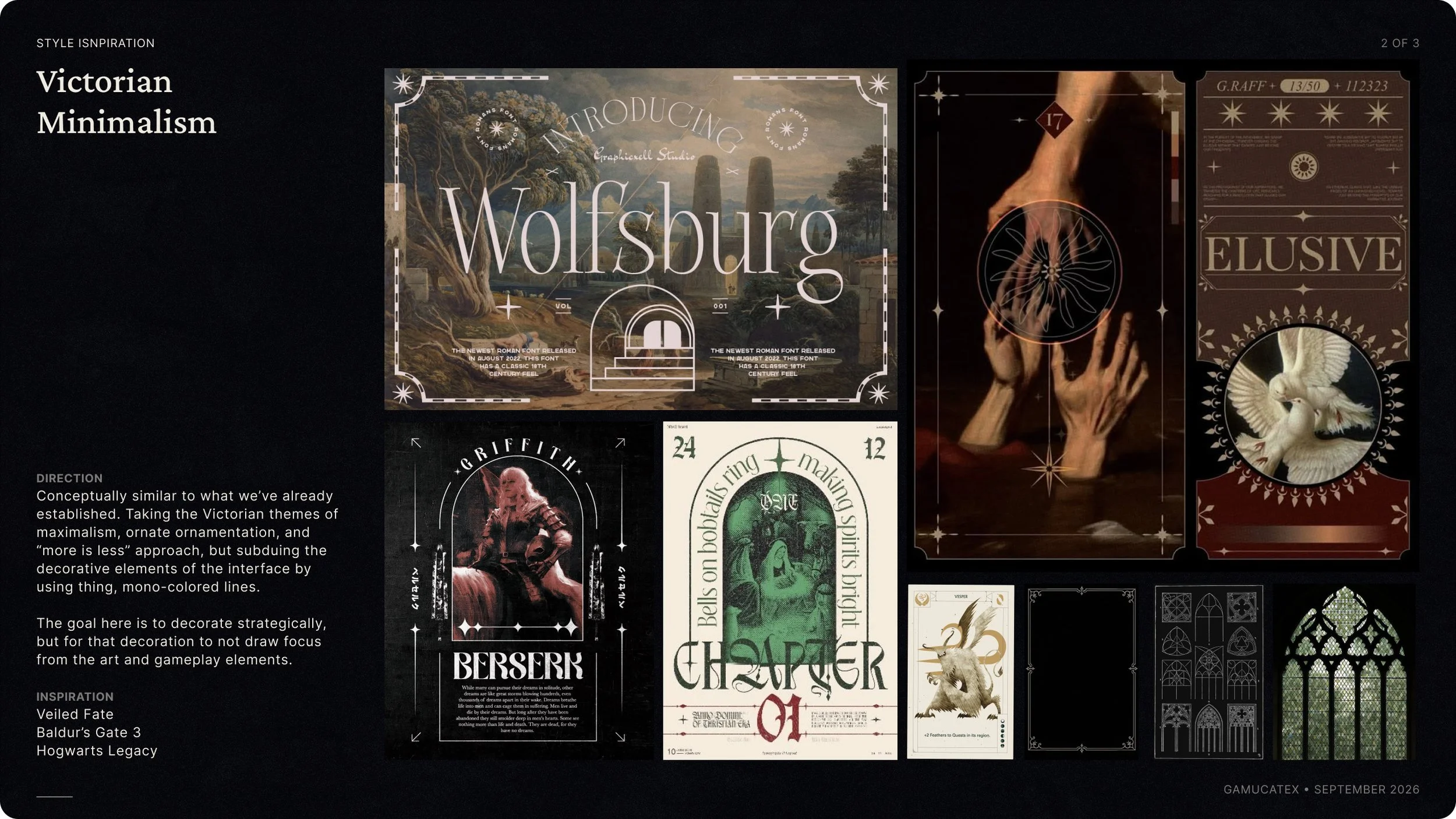
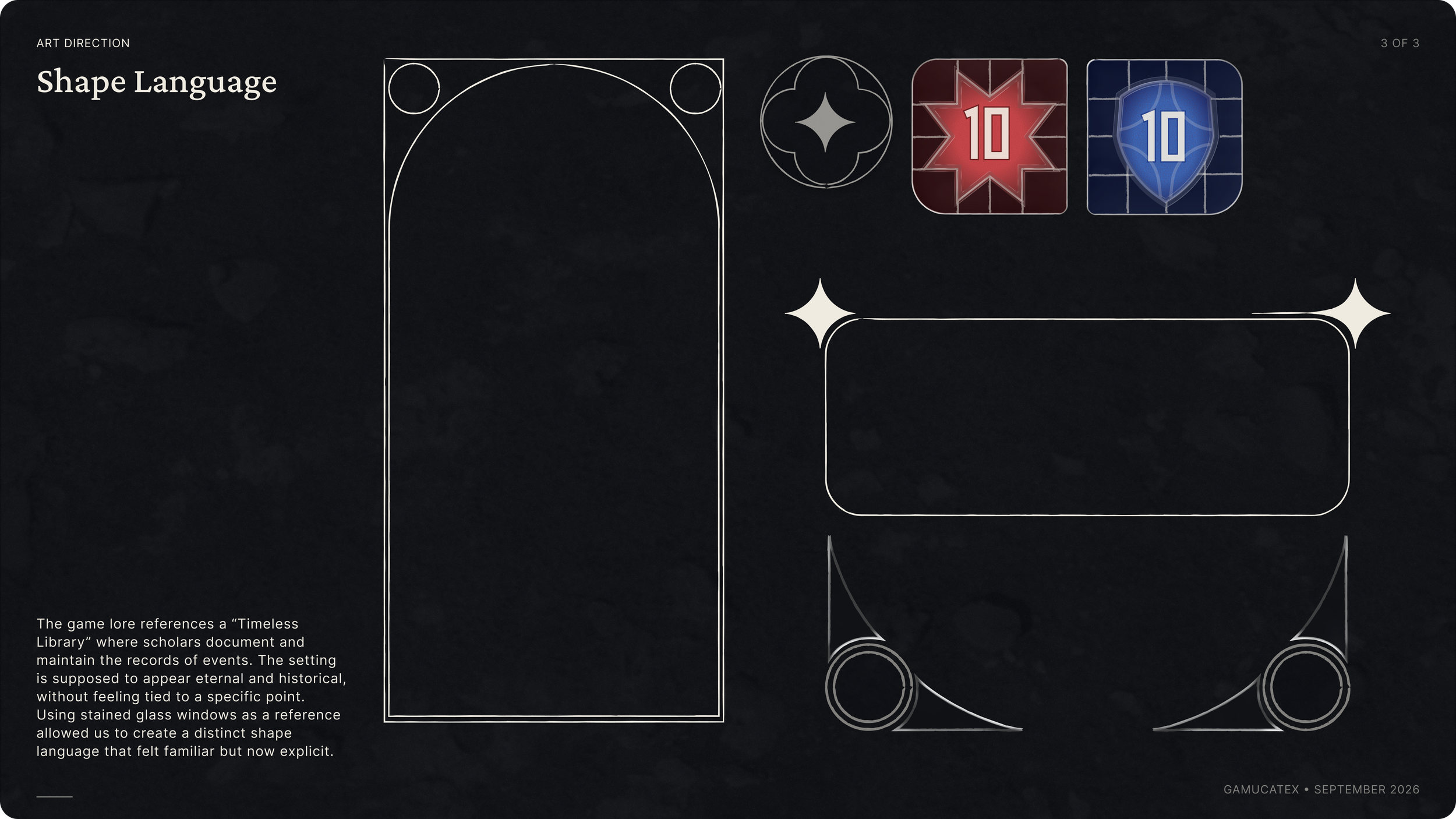
One of the most exciting aspects of this project was creating a unique style that felt both historically-inspired and timeless. Working under the requirement to use realistic textures and ubiquitous design language, I drew inspiration from stained-glass windows to drive the aesthetic.
Process
After identifying the core gameplay loop and required interactions with the Game Design team, I conducted an external UI audit to get a better sense of how other games tackle similar challenges.
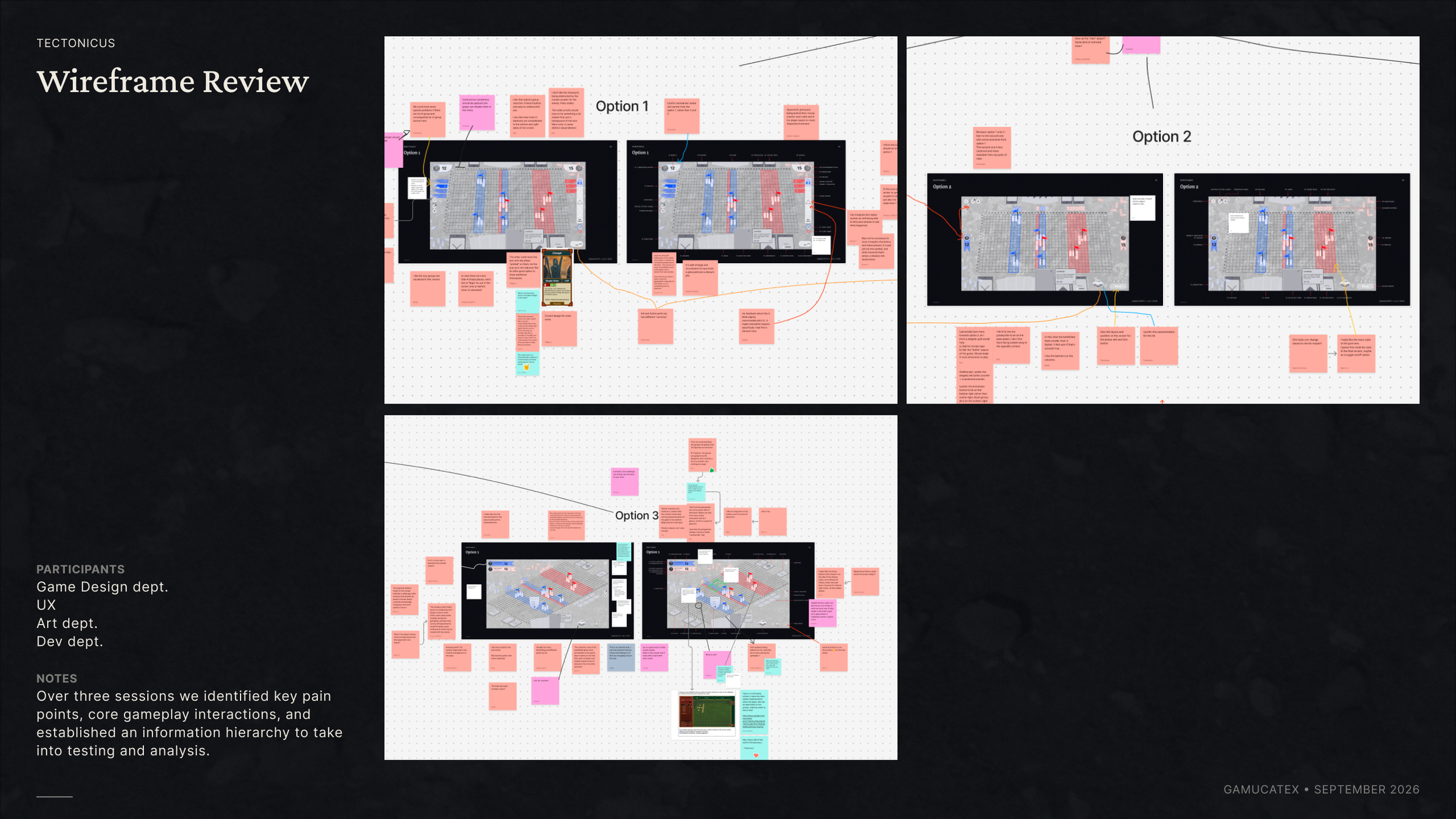
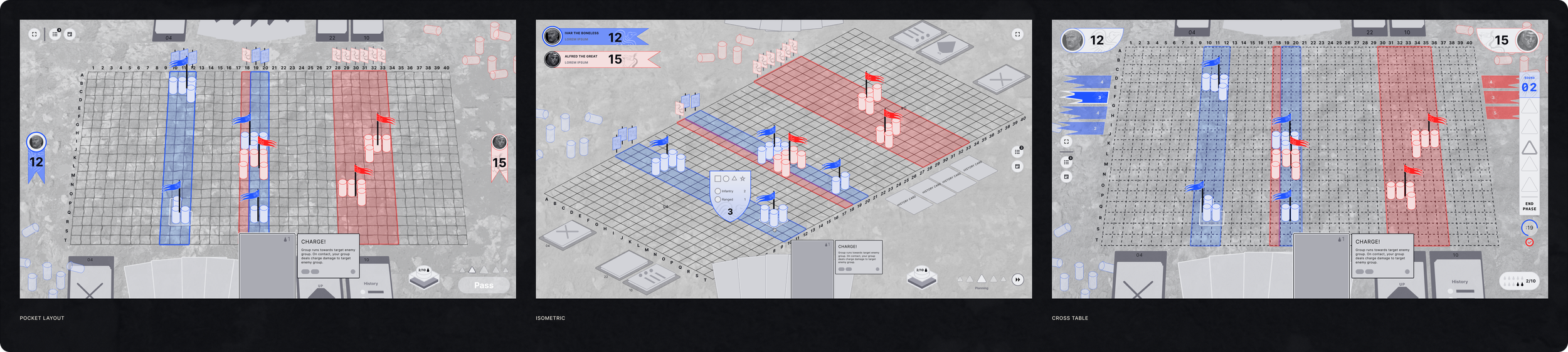
This audit informed a series of wireframes that were used in a workshop to determine information hierarchy and prioritize essential gameplay interactions.
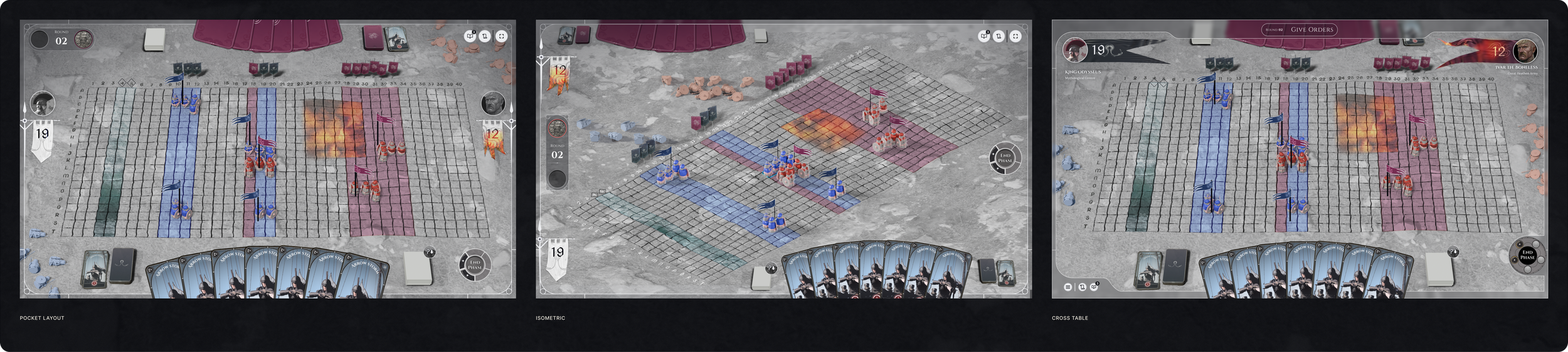
The wireframes explored various camera angles, Morale and Action Point positioning and displays and established distinct UX patterns.
Battlefield Audit